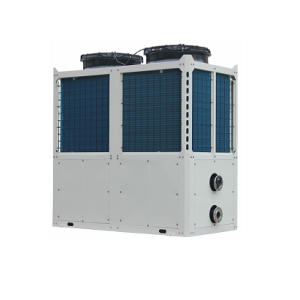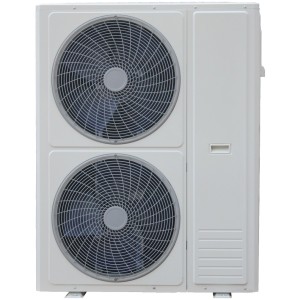
Greenhouse Heating with Heat Pumps: Keeping Crops Warm in Winter
Greenhouse cultivation depends on one non-negotiable factor: temperature stability. When outside temperatures drop below 10°C, an unheated greenhouse loses heat rapidly through its single-skin polycarbonate or glass covering, and crop growth slows or stops entirely. For decades, coal-fired boilers, diesel heaters, and biomass furnaces have been the default heating choice for commercial greenhouses. They deliver raw heat, but they also deliver ±5°C temperature swings, high fuel costs, and increasingly restrictive emissions regulations. Suoher's engineering team has spent years helping greenhouse operators and agricultural engineers transition from fossil-fuel heating to heat pump systems — and the results go far beyond energy savings. This guide covers the why, the how, the cost maths, and a real project where heat pumps improved both crop yield and profit margin.
Why Greenhouses Need Efficient Heating
A greenhouse is a solar collector with a leak. During the day, sunlight enters through the transparent covering and warms the air, soil, and plants inside. At night, with no solar input, the greenhouse radiates heat outward through the same covering that let the light in. A single layer of polycarbonate has a U-value of approximately 3.3–4.0 W/m²·K — far worse than any residential wall. This means a 1,000 m² greenhouse at 20°C inside, with an outside temperature of -5°C, loses roughly 25–30 kW of heat every single hour through the covering alone.
The heat loss calculation determines everything that follows. For a 1,000 m² greenhouse with 3.5 W/m²·K covering U-value and a 25°C temperature differential (20°C inside, -5°C outside), the conductive heat loss is:
Q = U × A × ΔT = 3.5 × 1000 × 25 = 87,500 W ≈ 87.5 kW
That is the steady-state loss. Infiltration, wind exposure, and thermal bridging at the frame add another 15–25%. A 1,000 m² greenhouse in a cold-climate winter needs approximately 100–110 kW of heating capacity to maintain 18–20°C at design outdoor temperature.
Temperature Swings with Coal Heating
Coal-fired boiler systems respond slowly. You stoke the fire, the water temperature rises, it circulates through pipe rails, and eventually the air temperature climbs. By the time the thermostat senses the greenhouse has reached setpoint, the thermal mass in the boiler and piping has already overshoot. The result is a sawtooth temperature profile — 15°C at 4 AM, 25°C by 8 AM, back down to 15°C by midnight. For crops like tomatoes, cucumbers, and strawberries, a ±5°C swing means stalled growth during the troughs and wasted heat during the peaks. Disease pressure also rises when humidity spikes during over-heat periods and condensation forms on leaf surfaces as temperature drops.
Energy Cost Share in Greenhouse Operations
Heating is the single largest operating cost for greenhouse cultivation in temperate climates. According to data from the European Commission's Joint Research Centre and national horticultural associations, heating accounts for 30–45% of total operating costs for a heated greenhouse in Northern Europe. In the Netherlands — the world's most intensive greenhouse horticulture market — energy costs can exceed 40% of variable production costs for tomato and pepper growers. Fuel price volatility directly threatens thin margins, and carbon pricing mechanisms like the EU Emissions Trading System (ETS) have added a per-tonne CO₂ cost that coal and gas heating must now absorb. This is the economic engine driving the shift to heat pumps.
Heat Pump Solutions for Greenhouses
A heat pump greenhouse heating system works differently from a combustion boiler. Instead of burning fuel to generate heat, it extracts thermal energy from ambient air, ground water, or soil and upgrades it to a usable temperature using a refrigerant compressor cycle. For every 1 kW of electricity consumed, a heat pump delivers 3–5 kW of heat. This coefficient of performance (COP) is the fundamental reason heat pumps cut greenhouse energy bills by 50–70% compared to direct electric or fossil-fuel heating.
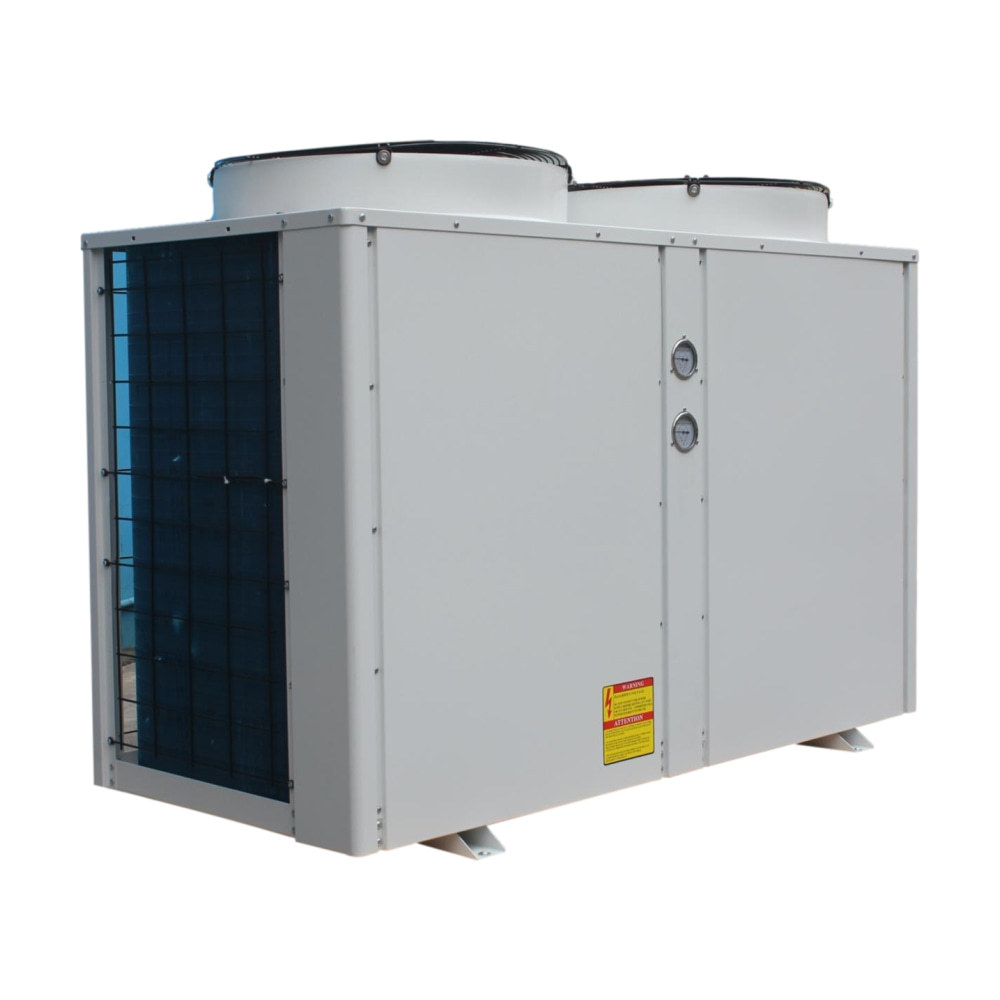
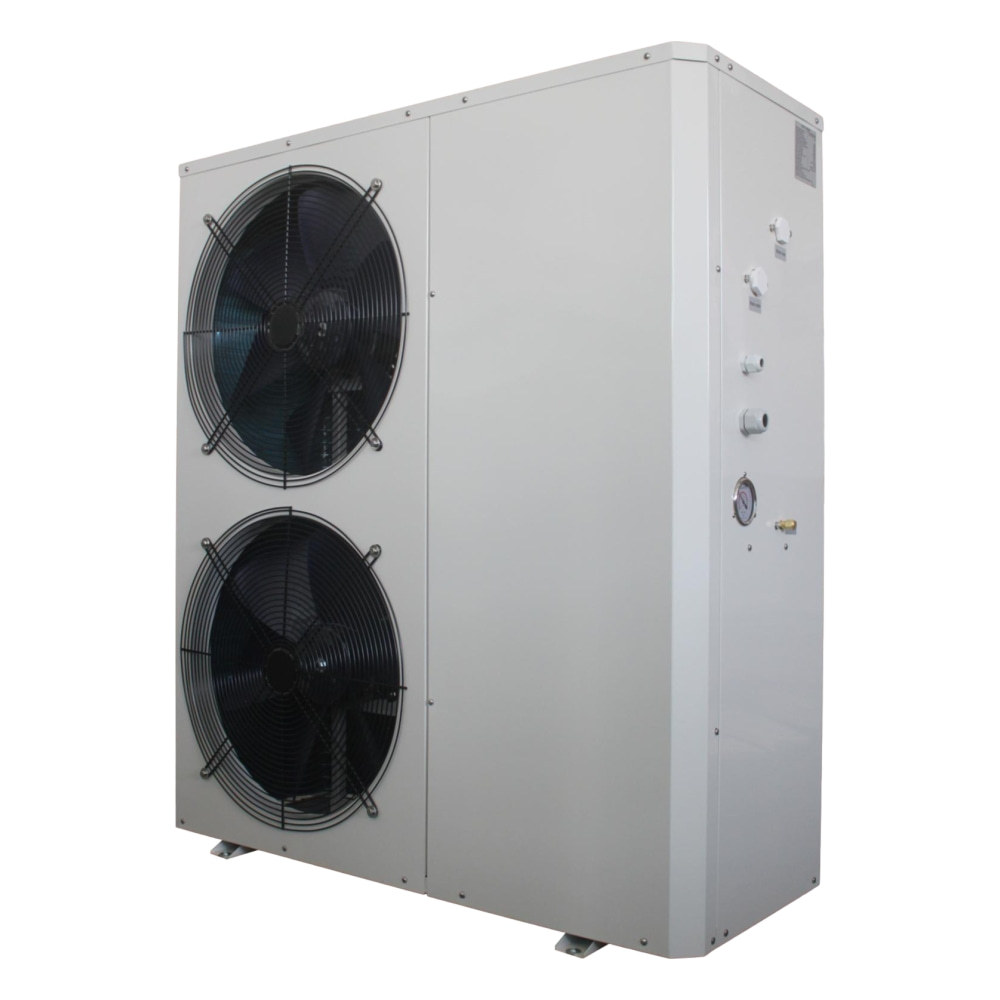
The image above shows the Suoher SHAW-34EVIM, a 34 kW EVI monobloc heat pump designed for low-ambient operation down to -25°C — ideal for greenhouse heating in cold-climate winter conditions.
Air Source vs Water Source
Two heat source configurations dominate greenhouse applications:
- Air source heat pumps extract heat from ambient air. They are simpler to install — no ground loop drilling, no well permits — and lower in capital cost. Modern EVI (Enhanced Vapor Injection) compressors maintain usable heating capacity down to -25°C outdoor, which covers the vast majority of greenhouse heating scenarios in temperate and continental climates. EVI monobloc units like the ones featured below are purpose-built for this temperature range.
- Water source / ground source heat pumps draw from groundwater or geothermal loops that maintain a stable 8–12°C year-round. They achieve higher COPs (4.5–6.0) but require significant ground-loop infrastructure or access to a water body. For greenhouses with existing geothermal wells or aquifer access, this is the premium option. For new-build projects on farmland without ground-loop infrastructure, air source is usually the faster and more cost-effective path.
Underfloor and Fan Coil Distribution
Heat delivery inside the greenhouse matters as much as the heat source. Two distribution methods are common in commercial greenhouses:
| Distribution Method | Temperature Range | Response Speed | Best For |
|---|---|---|---|
| Underfloor heating (PE-RT pipes in soil) | 30–40°C water | Slow (1–2 h thermal mass) | Soil-grown crops, baseline heating |
| Fan coil units (wall-mounted) | 45–55°C water | Fast (5–10 min) | Fast response, air temperature control |
| Pipe rail heating (steel pipes) | 50–65°C water | Medium (20–30 min) | Low-canopy crops, snow-melt at gutters |
Most commercial greenhouse heat pump projects use a hybrid approach: underfloor pipes provide a slow, stable thermal base that prevents root-zone temperatures from dropping below 15°C, while fan coils handle the peak-load and rapid-response duty. Heat pumps deliver water at 45–55°C — lower than the 70–80°C that coal boilers produce, but sufficient for underfloor and fan-coil systems designed for low-temperature operation.
Temperature Precision at ±1°C
This is where heat pumps outclass combustion heating. A DC inverter-driven heat pump modulates compressor speed continuously — it does not cycle on and off like a fixed-speed boiler. The result is a greenhouse air temperature that holds within ±1°C of setpoint, day and night. For temperature-sensitive crops like ornamental plants, seedlings, and high-value vegetables, this stability translates directly into faster growth, more uniform fruit set, and lower rejection rates at grading.
SHAW-34EVIM: 34 kW EVI Monobloc Heat Pump
Low-ambient EVI monobloc heat pump for greenhouse heating, hot water, and summer cooling. Rated heating capacity 34 kW at -12°C outdoor. Operates down to -25°C. 380V/3PH/50Hz power supply with 12,000 m³/h air flow.
- Heating capacity: 34 kW (EVI low-ambient)
- Power supply: 380V / 3PH / 50Hz
- Air flow: 12,000 m³/h
- Operating range: -25°C to 43°C
- Net dimensions: 1495 × 690 × 1075 mm
Cost and Payback
The economics of a greenhouse heat pump system are driven by three numbers: installed cost, annual energy savings, and the price spread between electricity and fossil fuel. Let us walk through a real-world example for a 1,000 m² heated greenhouse in a temperate European climate.
1,000 m² Greenhouse Example
Consider a tomato grower in Central Europe — say, southern Germany or Poland — currently heating with a 120 kW coal-fired boiler. The heating season runs October through April, approximately 200 days at an average of 12 heating hours per day. Annual fuel consumption: roughly 65 tonnes of coal at €250/tonne delivered, for a fuel cost of €16,250 per year. Add electricity for pumps and fans (€1,200) and maintenance (€1,500), and the total annual heating cost reaches approximately €18,950.
The heat pump replacement requires two Suoher SHAW-34EVIM units (total 68 kW nominal capacity, sufficient for the 100 kW peak load with a small buffer tank for peak shaving). The installed cost breakdown:
| Item | Cost (€) |
|---|---|
| 2 × SHAW-34EVIM heat pump units | 14,000 |
| Buffer tank 2,000 L + piping | 4,500 |
| Fan coil units (8 × FCU-5000) | 3,200 |
| Controls + sensors + electrical | 2,800 |
| Installation and commissioning | 4,000 |
| Total installed cost | 28,500 |
At a seasonal COP of 3.2 (accounting for defrost cycles and low-ambient operation), the heat pump system consumes approximately 28,500 kWh of electricity per year. At an average industrial electricity rate of €0.22/kWh (including demand charges), the annual energy cost is €6,270. Add maintenance of €800, and total annual operating cost is €7,070.
50%+ Savings vs Boilers
Annual savings: €18,950 - €7,070 = €11,880 per year. Against the €28,500 installed cost, the simple payback period is:
Payback = €28,500 ÷ €11,880/year = 2.4 years
This is before any government grant or carbon credit is applied. In many EU countries, agricultural heat pump projects qualify for 30–50% capital subsidies through rural development programmes or national energy-efficiency funds. With a 40% grant, the net installed cost drops to €17,100 and payback falls to 1.4 years. Even without subsidies, the 2.4-year payback is compelling enough that most greenhouse operators who run the numbers proceed with the conversion.
Cooling in Summer: The Bonus Function
Greenhouse overheating in summer is as damaging as winter cold stress. When internal temperatures exceed 30–32°C, tomato pollen becomes sterile, pepper fruit set fails, and leafy crops bolt to seed. Traditional solutions include ventilation fans, shade screens, and evaporative pad cooling — all of which consume energy and water. A heat pump system can reverse its cycle and deliver chilled water to the same fan coils used for winter heating. This provides mechanical cooling that holds internal temperature at 25°C even when outside air reaches 35°C. The incremental cost of enabling cooling mode is marginal — a reversing valve and slightly larger controls package — but the agronomic benefit is substantial: a 4–6 week extension of the productive growing season in shoulder months when temperatures fluctuate between heating and cooling demand.
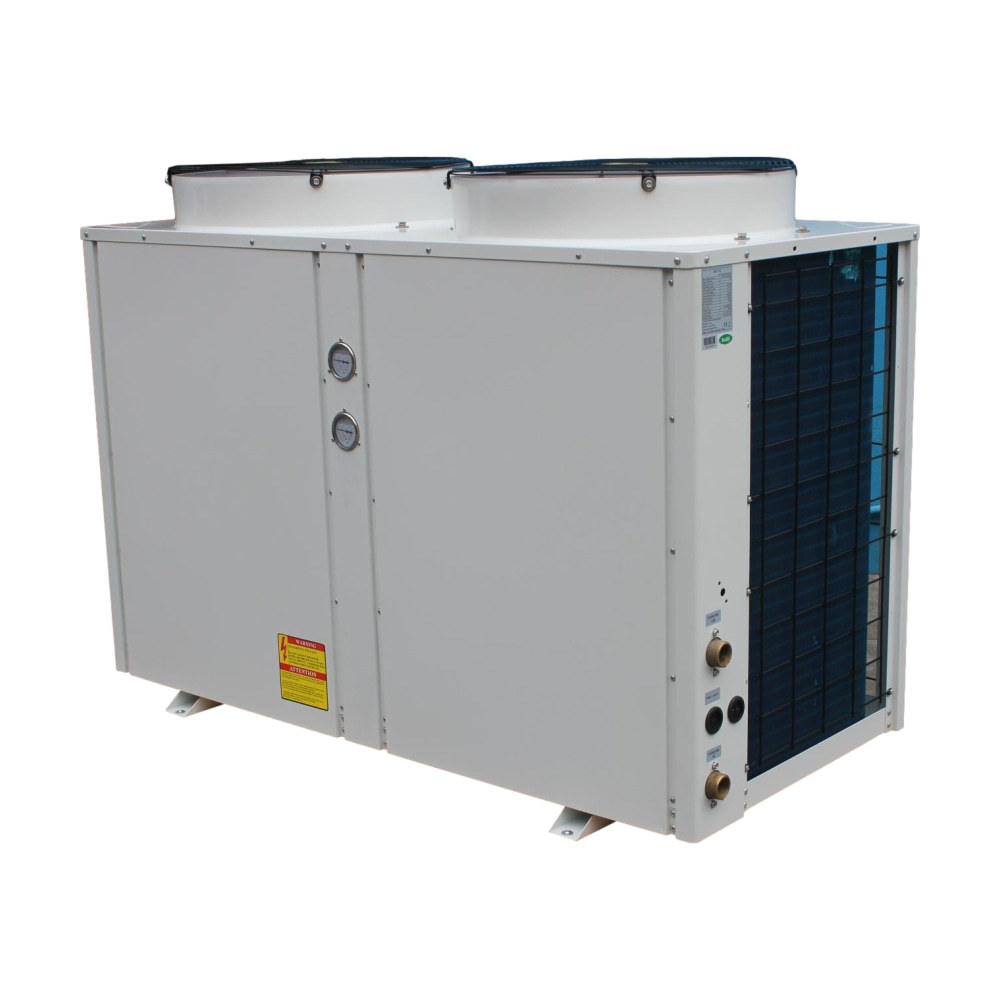
The Suoher SHAW-20EVIM — a 20 kW EVI monobloc heat pump shown above — is well suited to smaller greenhouse installations of 400–600 m², or as a modular unit in multi-stage cascade systems for larger operations.
Case Study: Greenhouse Heating Project
A 2,200 m² cut-flower greenhouse in the Netherlands replaced a 180 kW gas boiler with a cascade of four SHAW-34EVIM units (total 136 kW nominal, plus a 3,000 L buffer tank). The project was commissioned in October and monitored through a full heating season (October–April). The results were measured against the previous season's operating data.
Yield Improvement Data
| Metric | Previous (Gas Boiler) | Heat Pump System | Change |
|---|---|---|---|
| Air temp stability (±°C) | 4.5 | 1.2 | -73% |
| Stems/m²/week (peak season) | 68 | 81 | +19% |
| Rejection rate at grading | 12% | 6% | -50% |
| Annual energy cost | €31,400 | €12,800 | -59% |
| CO₂ emissions (tonnes/year) | 78 | 14 (indirect) | -82% |
The 19% increase in stem yield was driven by two factors. First, the tighter temperature control (±1.2°C vs ±4.5°C) eliminated growth stalls during temperature troughs. Second, the heat pump system eliminated combustion exhaust entirely — gas flue gas CO₂ enrichment was replaced with a controlled liquid CO₂ injection system, which delivered more precise and predictable CO₂ levels during daylight hours. The engineering team that designed the cascade layout noted that the buffer tank was the critical component: it allowed all four units to run at their most efficient operating point rather than cycling to track load fluctuations.
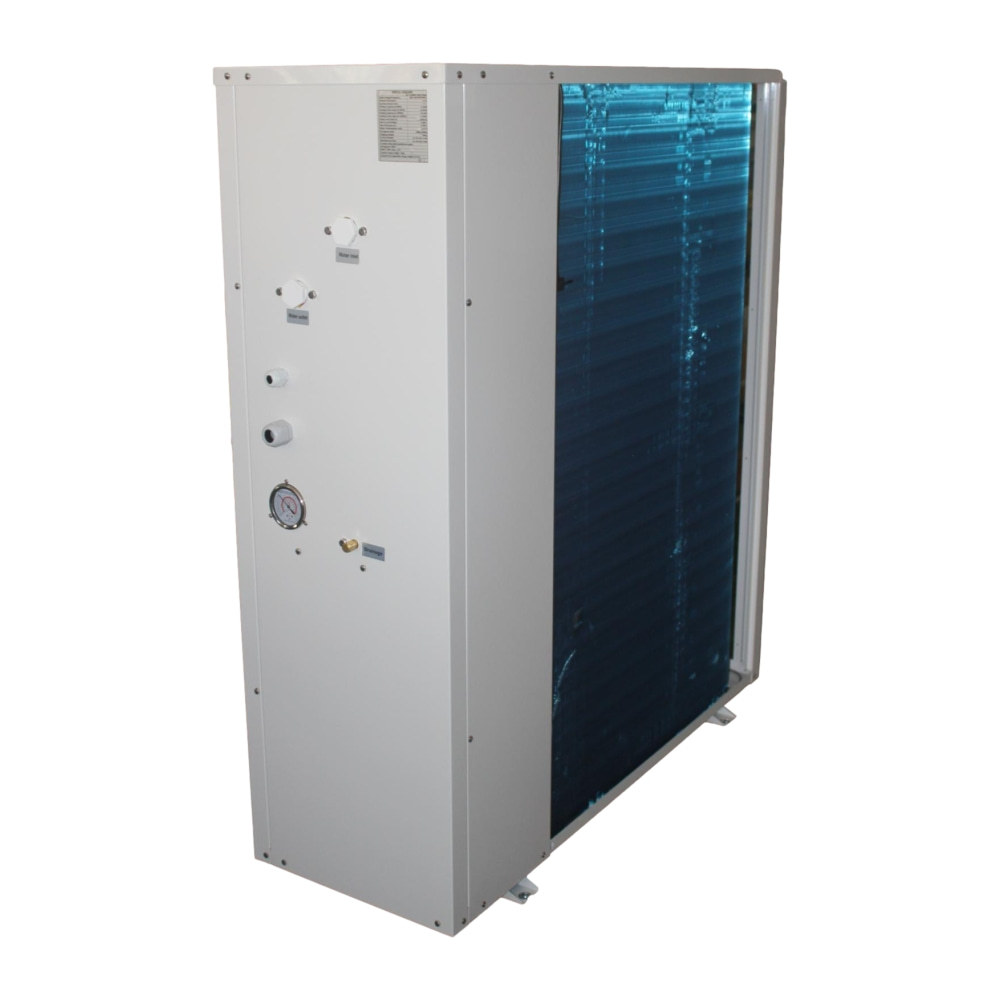
SHAW-20EVIM: 20 kW EVI Monobloc Heat Pump
Compact EVI monobloc heat pump for smaller greenhouses (400–600 m²) or as a modular building block in cascade systems. Low-ambient heating, hot water, and summer cooling in one unit.
- Heating capacity: 20 kW (EVI low-ambient)
- Power supply: 380V / 3PH / 50Hz
- Air flow: 6,500 m³/h
- Operating range: -25°C to 43°C
- Net dimensions: 1110 × 460 × 1250 mm
How to Specify a Greenhouse Heat Pump
Specifying the right heat pump for a greenhouse project requires six engineering decisions, each of which affects both capital cost and operating performance:
- 1. Calculate peak heat loss. Use the covering U-value, greenhouse surface area, and local design outdoor temperature (the 99% percentile from meteorological data). Add 20% for infiltration and wind exposure. This gives the minimum heat pump capacity.
- 2. Select heat source. Air source for simplicity and lower capital cost; water/ground source where existing wells or geothermal loops are available. EVI air source covers the vast majority of greenhouse applications down to -25°C.
- 3. Choose distribution method. Underfloor for soil-grown crops; fan coils for rapid response and hanging crops; pipe rails for low-canopy vegetables. Most projects use two of these in combination.
- 4. Size the buffer tank. A buffer tank of 10–15 L per kW of heat pump capacity allows the units to run at steady-state rather than cycling. For a 68 kW system, target 700–1,000 L minimum.
- 5. Plan for cooling. If summer temperatures regularly exceed 30°C in your region, specify a reversible heat pump from the outset. The marginal cost is small; retrofitting is expensive.
- 6. Verify electrical supply. EVI monobloc units above 15 kW typically require 380V three-phase power. Confirm transformer capacity and cable sizing with a licensed electrician before ordering.
The Suoher factory in Foshan can customise unit specifications — refrigerant charge, control protocols, and cascade configuration — to match the specific crop, climate, and greenhouse structure of your project. Send your greenhouse dimensions, target crop, and local climate data for a custom sizing recommendation.
Start Your Greenhouse Heating Project with Suoher
Replacing a coal or gas boiler with a heat pump system is one of the highest-ROI investments a greenhouse operator can make in 2026. The payback is typically 2–3 years without subsidies and under 18 months with available agricultural energy grants. Beyond the financials, you gain ±1°C temperature stability that improves yield, reduces crop rejection, and extends your growing season in both spring and autumn. If you are planning a new greenhouse build or converting an existing heating system, the Suoher engineering team can provide a free system design and equipment specification tailored to your crop, climate zone, and greenhouse dimensions. Contact the factory with your project details, or explore the EVI monobloc range to see which capacities fit your operation.