
Technical Insights
 Heat Pump Defrosting Technology: How Demand Defrost Works and Why It MattersSep 2,2026Defrost cycles decide whether an air source heat pump keeps its capacity through the 0-7C humid winter band. This guide explains the reverse-cycle defrost principle, compares timer defrost with sensor-based demand defrost, shows how smart inverter control extends defrost intervals to 90-120 minutes, and lists what to verify before buying or installing a defrost-ready unit in snowy regions.
- Inverter vs Fixed-Speed Heat Pump Compressors: A Technical ComparisonAug 31,2026Fixed-speed heat pump compressors run at full output and cycle on/off; DC inverter compressors modulate from roughly 10% to 100% of rated capacity. This technical comparison covers how each architecture works, head-to-head differences in seasonal efficiency, temperature stability, noise, lifespan and cost, why inverter drive matters in cold climates, common repair-cost and compatibility myths, and guidance on when to choose which - backed by factory test-bench data.
- COP vs SCOP: How to Read Heat Pump Efficiency Ratings Like a ProAug 29,2026COP measures heat pump efficiency at one lab point; SCOP averages it across a whole heating season. This guide explains EN 14511 and EN 14825 testing, the three EU climate zones, SEER2 and HSPF2 conversions, how the ErP A+++ label works, and what to compare when sourcing heat pumps.
- How EVI Technology Works: Enhanced Vapor Injection for Cold Climate Heat PumpsAug 21,2026Enhanced Vapor Injection (EVI) lets a heat pump hold rated capacity down to -25C. This technical deep-dive explains the quasi-two-stage cycle, the flash tank and economizer circuits, and how to verify EN 14511 cold-climate data on real products.
- R32 vs R290 Refrigerants: What Heat Pump Buyers Must Know Before 2027Aug 20,2026The EU F-Gas Regulation (EU 2024/573) starts banning R32 monobloc heat pumps under 12 kW from January 2027. This guide compares R32 vs R290 refrigerants - GWP, efficiency, flammability and cost - decodes the regulation timeline through 2035, and gives importers and distributors a practical checklist for stocking decisions in 2026.
- Understanding EVI Heat Pump Manufacturer Technology: Performance and Efficiency ExplainedDec 30,2025Heat pumps with Enhanced Vapor Injection (EVI) technology are revolutionizing heating and cooling, particularly in cold climates where traditional heat pumps lose efficiency. EVI technology significantly boosts a heat pump's ability to operate efficiently in low ambient temperatures, even as low as -25°C or -30°C. This is achieved by injecting refrigerant vapor mid-cycle, which maintains a higher Coefficient of Performance (COP) and allows the system to produce more heat energy for every unit of
- Why do swimming pool heat pumps need to use titanium heat exchangers?Dec 28,2024Titanium tube heat exchangers have become the preferred choice for swimming pool heat pump heat exchangers due to their excellent corrosion resistance and good heat transfer efficiency
- Why is DC inverter air source heat pump more energy-efficientDec 23,2024DC inverter air source heat pump can flexibly adjust the operating frequency of the compressor according to the ambient temperature and water temperature, and output the most suitable heat with the most suitable energy consumption, thereby saving energy and improving energy efficiency.
- Why is air source heat pump energy-savingDec 17,2024Air to water heat pump is an efficient, energy-saving, environmentally friendly and easy-to-use new energy product that can bring more convenience to your life
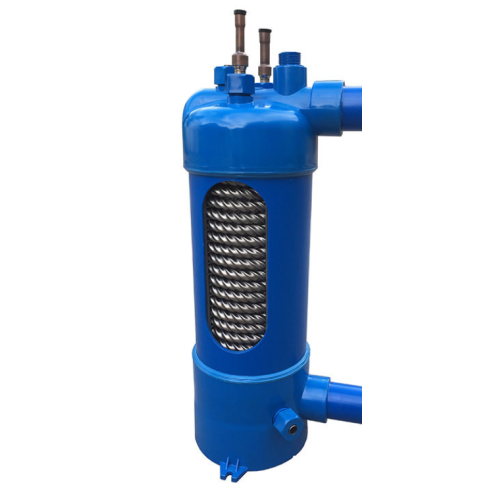
- Types of the heat pump heat exchangerNov 16,2024According to the differences in the usage environment and water quality of heat pumps, different products will use different water side heat exchangers, which have different appearances and characteristics, but are all used to complete the heat exchange between water and refrigerant.
- The built-in protection function of the heat pump unitOct 24,2024In order to ensure the normal operation of the heat pump and to promptly alarm or automatically shut down the system in case of abnormal operating parameters or operating conditions, and to protect the safety of the system, heat pump manufacturers generally embed many protection functions in the control system.
- How do ground source heat pump works?Aug 22,2024The ground source heat pump collects heat from the solar energy stored underground, rock, ground water, lake, etc. The heat is transferred from ground to heat pump by the secondary refrigerant which consists of water and an environmentally-friendly anti-freeze solution. It circulates through the closed loop, collecting heat from the ground and transferring to the heat pump.
Are you looking for a reliable manufacturer of down home textile products?
We can quickly provide customers with market analysis, technical support and customized services.Get Heat Pump Quotation Now
- *Title
- *Content