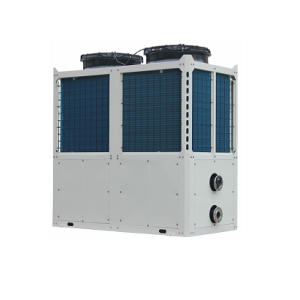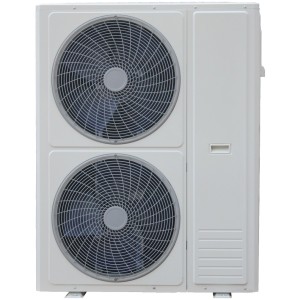
Heat Pump Defrosting Technology: How Demand Defrost Works and Why It Matters
If a residential air source heat pump loses heating capacity on the coldest mornings of the year, the cause is rarely the compressor or the refrigerant - it is frost on the outdoor coil. Frosting cuts airflow, blocks heat exchange, and can shut a unit down entirely if the defrost cycle is too slow or too wasteful. This guide explains how the heat pump defrost cycle actually works, why demand defrost outperforms old timer-based logic, and how to specify an outdoor unit you can trust from -5 to -20 °C.
1. Why heat pumps frost in winter
An air source heat pump works by moving heat from outdoor air into the refrigerant. When the outdoor coil is colder than the air around it, moisture condenses and freezes on the fins. The colder the outdoor temperature and the higher the humidity, the faster frost builds. This is not a defect; it is basic thermodynamics.
When frosting happens (0-7 °C with high humidity)
The most aggressive frosting window is between 0 and 7 °C combined with high relative humidity (above 75%). Below -10 °C the air holds far less moisture and frost grows more slowly; above 7 °C the coil temperature usually stays above freezing. In coastal northern Italy, central France, the U.S. Mid-Atlantic, and large parts of East Asia, the 0-7 °C humid band dominates winter, which is why complaints about heat pump frosting cluster in exactly these regions.
Effect on capacity and noise
Even a thin frost layer reduces heat transfer noticeably: the ice acts as insulation between the refrigerant and the airstream. Field data from cold-climate trials shows that 1-2 mm of frost can cut heating capacity by 10-15%; a 3-5 mm layer can drop it by 25-40%. The compressor keeps running at high load to chase a falling outlet temperature, increasing electricity use and audible noise - the second most common cause of winter service calls after refrigerant undercharge.
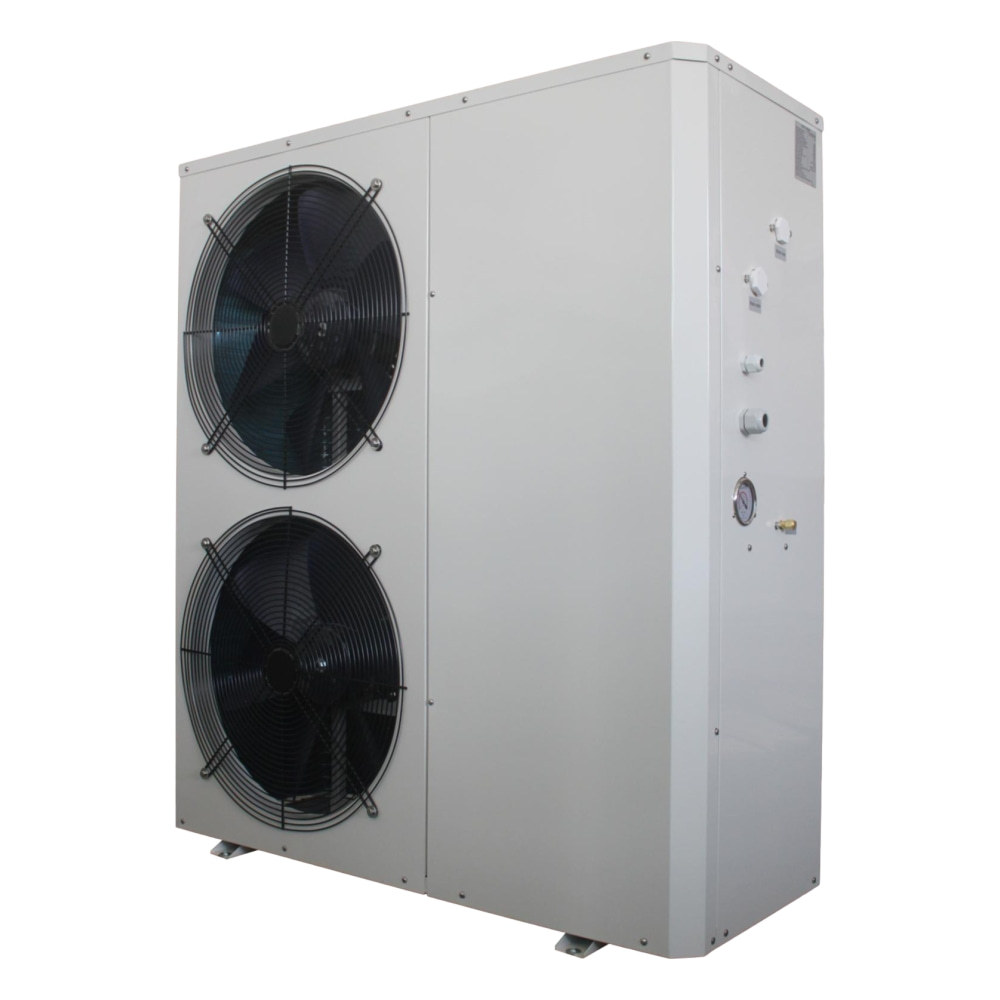
EVI monobloc units such as the Suoher SHAW-16EVIM are designed for sustained low-ambient operation, where a controlled defrost cycle is the difference between reliable heat and an iced-up coil by mid-morning.
2. How defrost works: the reverse cycle
The industry-standard way to remove frost from an air source heat pump is the reverse cycle (hot gas) defrost. The heat pump briefly switches into cooling mode - the four-way reversing valve flips - so hot discharge gas from the compressor is routed into the outdoor coil instead of the indoor coil. The hot gas melts the frost from the inside out, the resulting water drains through the base pan, and after a few minutes the unit returns to heating mode.
A complete defrost cycle typically lasts 4 to 12 minutes, depending on frost thickness, outdoor temperature, and humidity. During this window indoor heating stops; the indoor coil acts as a small evaporator. That is why defrost frequency and defrost duration directly affect indoor temperature stability: long or frequent defrosts lead to noticeable room-temperature swings and cold drafts. The goal of every modern defrost-control algorithm is to defrost only as often as needed, and only for as long as needed.
3. Timer defrost vs demand defrost
For decades, residential heat pumps defrosted on a fixed timer - for example every 30, 45, or 60 minutes of compressor runtime. Timer defrost is simple and cheap to implement, but it has well-known limitations.
Why timer defrost wastes energy
A timer cannot tell whether the coil actually has frost. It will run a defrost cycle on a cold, dry winter night when the coil is perfectly clear, and it will wait too long on a humid afternoon when the coil is icing fast. In the first case the system burns extra electricity and reduces indoor comfort for no benefit; in the second case it allows capacity to drop before intervening. Either way, seasonal efficiency (SCOP) suffers.
Sensor-based demand defrost
Demand defrost replaces the clock with sensor feedback. Common signals include outdoor coil temperature measured against ambient temperature (the ΔT between coil and outside air tells you whether frost is insulating the coil), humidity sensors, and pressure differential across the refrigerant circuit. When the control logic decides the coil is actually losing capacity, it triggers defrost; when the coil returns to design temperature, it terminates the cycle early. The result is fewer defrost cycles per day, shorter average defrost duration, and measurable SCOP gains in the 5-10% range compared with timer defrost.
16 kW EVI monobloc with sensor-driven demand defrost and extended defrost intervals for cold-climate heating and hot-water duty. Single-phase 220V supply suits European residential projects.
4. Smart defrost in modern inverter heat pumps
Where demand defrost adds sensors, smart defrost adds software. Modern inverter units combine coil temperature, ambient temperature, humidity, and compressor frequency into a model that predicts when frost will actually reduce performance - and starts a defrost cycle only when needed.
AI-assisted defrost logic
Predictive algorithms watch the trend of the coil-to-air ΔT, the rate of compressor amp change, and the indoor-side water-out temperature drop. If a coil is icing, the ΔT collapses long before the user feels the capacity loss, so the controller can intervene earlier and shorter than a fixed timer ever could. In production testing and field trials this approach reduces defrost energy consumption by roughly 18% compared with a 60-minute fixed-timer baseline on equivalent EVI monobloc hardware.
Defrost intervals extended to 90-120 minutes
Smart defrost routinely extends the interval between cycles from the 30-45 minute range to 90-120 minutes in dry, cold conditions - sometimes longer. The practical benefit is steady indoor temperatures, lower defrost losses (typically only 2-5% of daily heating energy instead of 8-12%), and quiet operation overnight. The longer the unit can go without forcing a defrost, the better the seasonal efficiency and the more comfortable the home.
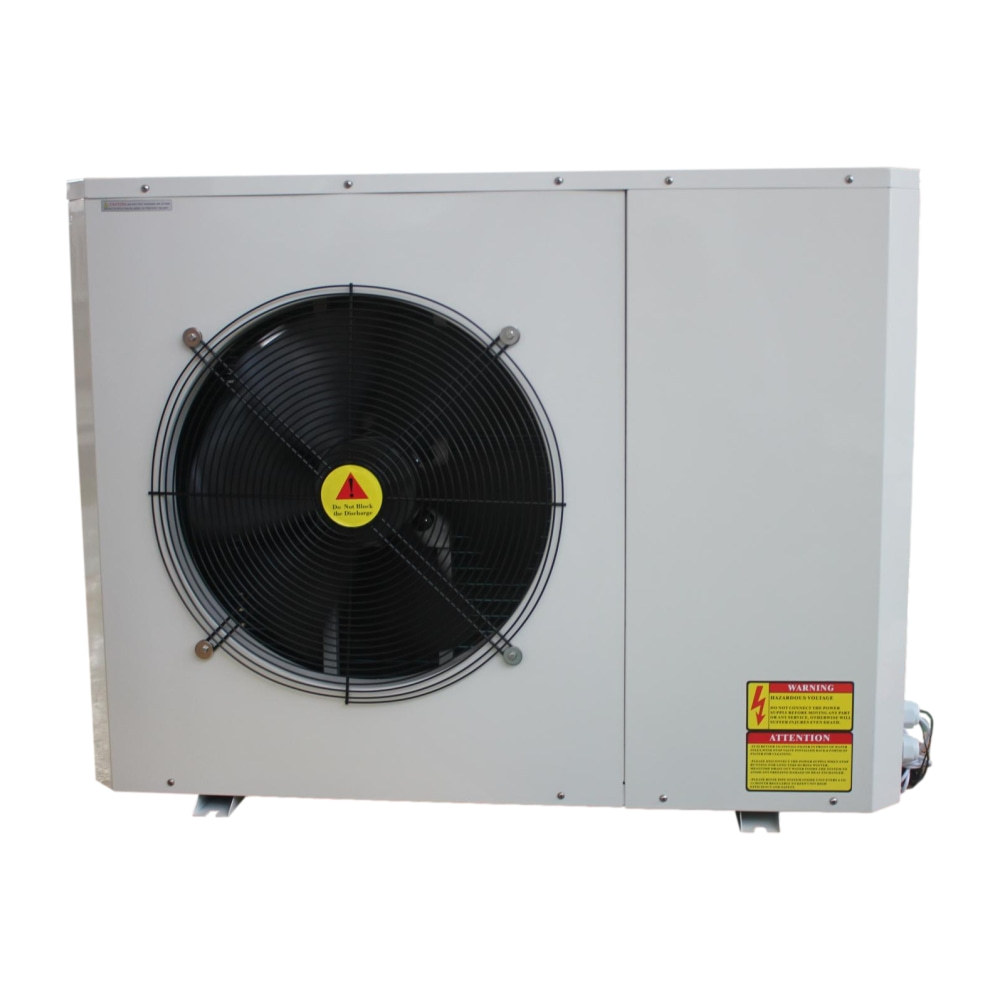
Smart inverter EVI monoblocs (Suoher SHAW-12EVIM shown) coordinate compressor ramp-down with defrost termination, keeping indoor temperature drift under 1 °C across a typical cold-climate day.
5. Frosting myths and misconceptions
Three claims come up over and over again in installer forums. None of them hold up under measurement.
- "More defrost is always better." False. Every defrost cycle steals heat from the indoor coil, stops heating for several minutes, and consumes compressor power. Over-defrosting wastes energy and destabilises indoor temperature.
- "A bigger outdoor unit will frost less." Usually the opposite. Oversized units run at low part load, lower coil temperatures, and tend to frost more - not less. Right-sizing matters.
- "A metal base pan is enough." A metal pan drains meltwater; it does not stop frost from forming on the coil. Only correct defrost logic can do that.
The underlying rule: the frequency of defrost cycles should be driven by measured coil performance, not by rule of thumb. Suoher engineers apply this principle when qualifying new outdoor units in the enthalpy chamber at the factory - a coil that does not frost in a controlled -7 °C wet test rarely survives a real December morning in Munich.
6. What to check before buying in snowy regions
For any installation in a region where the 0-7 °C humid band is common - Northern Europe, the U.S. Northeast, the Korean peninsula, northern China, mountainous Japan - confirm the following before you place the order.
Base pan heater and drainage
An electrically heated base pan is a simple feature that prevents meltwater from refreezing inside the unit. Look for a stainless or polymer pan with an integrated heater, a dedicated drain port, and a thermostat that only energises the heater below ~3 °C. Cheap pans with no heater are a winter service liability.
Defrost termination temperature and algorithm
Ask for the defrost termination temperature (typically 5-15 °C on the outdoor coil) and confirm the control is sensor-driven, not pure timer. For inverter models, ask how the compressor ramp interacts with defrost initiation - a brief ramp-down before defrost reduces hot-gas waste. Demand EN 14511 or EN 14825 test data for the model number at -7 °C and -15 °C, and ask whether the test was performed on a clean coil or a deliberately frosted coil.
Installation details that matter
- Mount the unit with at least 30 cm of clearance on coil sides and 60 cm in front for airflow and service access.
- Avoid locations where roof drip or snow drift can bury the coil.
- Confirm the drain line slopes downward and is not blocked by ice - a frozen drip tray is a common source of "the unit leaks water indoors" complaints.
Compact 12 kW EVI monobloc for mid-sized homes and light commercial projects. Sensor-based demand defrost and a heated base pan keep it productive through the toughest winter weeks.
Audit Your Defrost Strategy Before the First Cold Snap
Most winter heat pump failures are defrost failures in disguise: cycles that are too slow to start, too long to finish, or too frequent for the conditions. If your project is in a cold, humid climate, treat the defrost control algorithm as a first-class specification - not a footnote in the brochure. Ask for sensor-based demand defrost, a clear defrost termination temperature, and an extended defrost interval supported by the test report. Pair that with a heated base pan and a correctly mounted outdoor unit, and the heat pump defrost cycle quietly does its job in the background.
Need help qualifying an outdoor unit for a cold-climate project? Suoher's export engineering team can share model-level EN 14511 / EN 14825 data, defrost-cycle field measurements, and recommended installation configurations for snowy regions. Review the SHAW-12EVIM spec sheet or contact Suoher to request a defrost-performance dossier for your target climate zone.