Heat Pump vs Gas Boiler: The 2026 Running Cost Showdown in Europe
For years, the standard advice was simple: gas boilers are cheaper to run, heat pumps are greener but cost more upfront. In 2026, that equation has fundamentally shifted across Europe. Rising carbon prices, narrowing electricity-to-gas price ratios, and generous national subsidies have turned the heat pump into the lower-cost option for millions of households. This article breaks down the real numbers — using current Eurostat data, the SCOP formula, and country-by-country comparisons — so you can decide with confidence.
Why the Comparison Flipped in 2026
Three forces have converged to tip the running-cost balance toward heat pumps in 2026:
Electricity-to-Gas Price Ratio
The single most important variable in any heat pump versus gas boiler comparison is the electricity-to-gas price ratio — how many kWh of gas one kWh of electricity buys. In 2022, that ratio spiked above 4.0 in many EU countries, making heat pumps uncompetitive on raw energy cost alone. By early 2026, Eurostat data shows the ratio has settled back to 2.5–3.5 across most of Europe. Since a modern air-source heat pump achieves a Seasonal Coefficient of Performance (SCOP) of 3.0 to 4.5, it delivers more useful heat per euro spent than a condensing gas boiler once the ratio drops below roughly 3.8.
Rule of thumb: If your electricity-to-gas price ratio is below 3.5 and your heat pump SCOP is above 3.5, the heat pump wins on running cost alone — before any subsidy.
CO₂ Pricing
The EU Emissions Trading System (ETS) carbon price has added a direct surcharge to fossil heating. In Germany, the national CO₂ price on transport and buildings (nEHS) reached €55 per tonne in 2026, adding roughly 1.1 cents per kWh to gas — a cost that does not apply to heat pump electricity in most member states. The UK's ETS and the Dutch CO₂ levy follow the same logic. As carbon prices climb, the effective gas-to-electricity cost gap narrows further.
The Math: SCOP vs Boiler Efficiency
Before diving into country data, let's establish the formula that governs every comparison. The annual heating cost is:
Annual cost = (Heat demand ÷ Efficiency) × Energy price
For a gas boiler, "efficiency" means the seasonal efficiency of a condensing boiler — typically 90–95%. For a heat pump, it's the SCOP, which measures how many kWh of heat the pump delivers per kWh of electricity consumed across a full heating season.
Worked Example: 15,000 kWh German Home
Consider a moderately insulated German single-family home with an annual space-heating demand of 15,000 kWh (a typical figure for a 120–150 m² house built before 2000 with basic insulation upgrades).
| Parameter | Condensing Gas Boiler | Air-Source Heat Pump |
|---|---|---|
| Heat demand | 15,000 kWh | 15,000 kWh |
| Efficiency / SCOP | 0.90 (90%) | 3.5 |
| Energy input needed | 16,667 kWh gas | 4,286 kWh electricity |
| Energy price (€/kWh) | €0.12 (gas) | €0.33 (electricity) |
| Annual running cost | €2,000 | €1,414 |
| Annual saving with heat pump | €586 (29% lower) | |
Source: Energy prices based on Eurostat H1 2026半年度 data for Germany. SCOP 3.5 reflects a mid-range DC inverter unit at A7/W35. Actual values vary with climate, flow temperature, and system design.
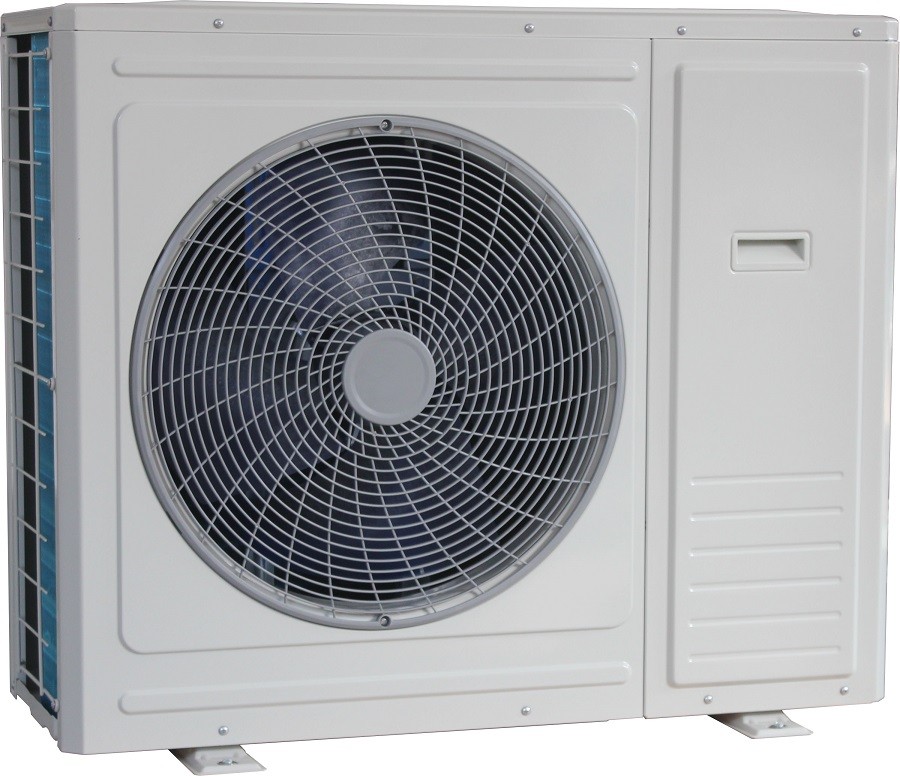
Suoher's DC inverter heat pumps, such as the SHAW-9DM1/K shown above, are engineered precisely for this mid-capacity retrofit scenario — a 220V monobloc delivering 5.1–8.9 kW with a COP reaching 4.49 at partial load, meaning the unit spends most of the heating season in its most efficient operating band.
Country-by-Country Running Cost Comparison
The same 15,000 kWh home yields very different results depending on local energy prices. The table below uses 2026 first-half Eurostat and national regulator data. All figures assume a condensing gas boiler at 90% efficiency and an air-source heat pump at SCOP 3.5.
| Country | Electricity (€/kWh) | Gas (€/kWh) | Ratio | HP Annual (€) | Boiler Annual (€) | HP Saving |
|---|---|---|---|---|---|---|
| Germany | 0.33 | 0.12 | 2.75 | 1,414 | 2,000 | 29% |
| France | 0.25 | 0.10 | 2.50 | 1,071 | 1,667 | 36% |
| Netherlands | 0.28 | 0.14 | 2.00 | 1,200 | 2,333 | 49% |
| Italy | 0.30 | 0.14 | 2.14 | 1,286 | 2,333 | 45% |
| United Kingdom | 0.31 | 0.08 | 3.88 | 1,329 | 1,333 | ~0% |
Sources: Eurostat energy price statistics (nrg_pc_205/nrg_pc_202), Ofgem price cap (UK), ARERA (Italy), PBL Netherlands. Prices include taxes and network charges. Updated 2026 H1.
The UK stands out as the toughest market for heat pump running-cost economics, with an electricity-to-gas ratio near 3.9. However, the UK's Boiler Upgrade Scheme subsidises up to £7,500 of the installation cost, which significantly shortens the payback period despite the narrower running-cost gap.
Upfront Cost and Subsidies
The installed cost of an air-source heat pump typically ranges from €8,000 to €15,000, depending on capacity, system complexity, and whether a hot water cylinder or buffer tank is needed. A like-for-like gas boiler replacement runs €3,000–€5,000. The good news: every major European market now offers substantial grants that close — or eliminate — that gap.
National Subsidy Programmes at a Glance
| Country | Programme | Max Grant | Notes |
|---|---|---|---|
| Germany | BEG (Bundesförderung für effiziente Gebäude) | Up to €24,000 | Up to 70% of eligible costs for residential heat pump replacement |
| France | MaPrimeRénov' | Up to €11,000 | Income-tested; combined with CEE bonus for heat pump retrofit |
| Netherlands | ISDE (Investeringssubsidie duurzame energie) | Up to €5,000 | Fixed grant per unit; no income test |
| United Kingdom | BUS (Boiler Upgrade Scheme) | £7,500 (≈€8,700) | Voucher-based; property must have adequate insulation |
Sources: BAFA/KfW (Germany), ANAH (France), RVO (Netherlands), Ofgem (UK). Grant amounts current as of 2026 and subject to eligibility criteria.
Net Cost After Subsidy
For our benchmark 15,000 kWh home, here's how the numbers play out:
- Germany: Heat pump installed at €10,000 → BEG grant €7,000 → net upfront €3,000. Gas boiler replacement: €4,000. The heat pump is only €1,000 more expensive upfront, while saving €586 per year.
- France: Heat pump at €10,000 → MaPrimeRénov' €8,000 → net €2,000. Gas boiler: €3,500. The heat pump is cheaper upfront and saves €596 per year.
- Netherlands: Heat pump at €9,000 → ISDE €3,000 → net €6,000. Gas boiler: €4,000. Payback from running cost saving of €1,133/year: under one year on the €2,000 premium.
- UK: Heat pump at £10,000 → BUS £7,500 → net £2,500 (≈€2,900). Gas boiler: £2,500 (≈€2,900). Break-even upfront, with modest annual saving.
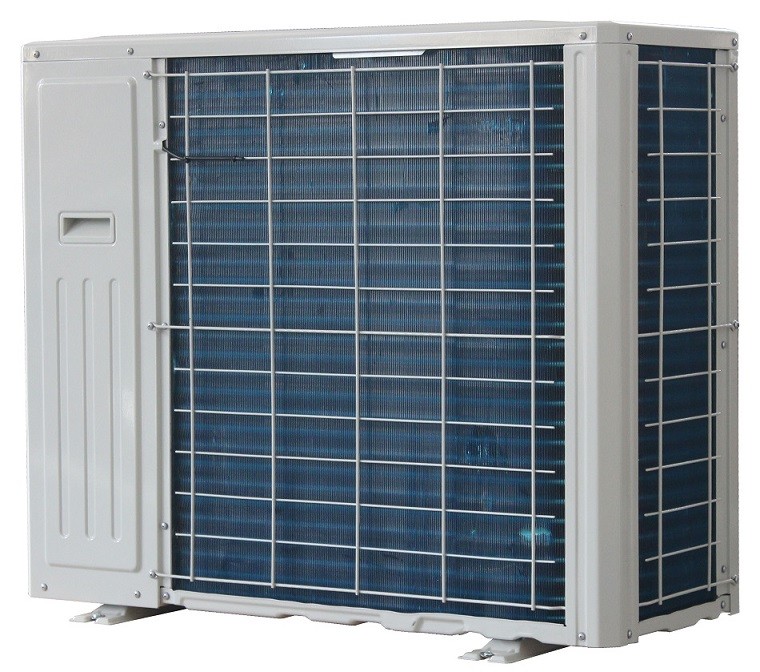
Suoher SHAW-9DM1/K — Economical DC Inverter Heat Pump
A 220V monobloc built for small to mid-size European homes replacing a gas boiler. GMCC inverter compressor modulates from 5.1 to 8.9 kW, achieving COP up to 4.49 at partial load — exactly where a heating system spends 80% of its operating hours.
- Heating capacity: 5.1–8.9 kW
- COP: up to 4.49
- Power supply: 220V single-phase
- Max water temp: 60°C
Total Cost of Ownership Over 10 Years
Running cost and upfront price are only two pieces of the puzzle. A full 10-year total cost of ownership (TCO) must include maintenance, anticipated energy price trends, and system lifespan. The table below models our 15,000 kWh benchmark home in Germany.
| Cost Component (10 years) | Gas Boiler | Heat Pump |
|---|---|---|
| Upfront (after subsidy) | €4,000 | €3,000 |
| Running cost (10 × annual) | €20,000 | €14,140 |
| Maintenance (€150/yr vs €100/yr) | €1,500 | €1,000 |
| Assumed price inflation (gas +4%/yr, elec +2%/yr) | €4,800 | €1,500 |
| 10-Year TCO | €30,300 | €19,640 |
| 10-year saving with heat pump: €10,660 (35%) | ||
Modelled on Eurostat price trends 2020–2026 and IEA World Energy Outlook 2025 retail price forecasts. Assumes boiler lifespan 12–15 years, heat pump lifespan 15–20 years, annual maintenance €100 (HP) / €150 (boiler).
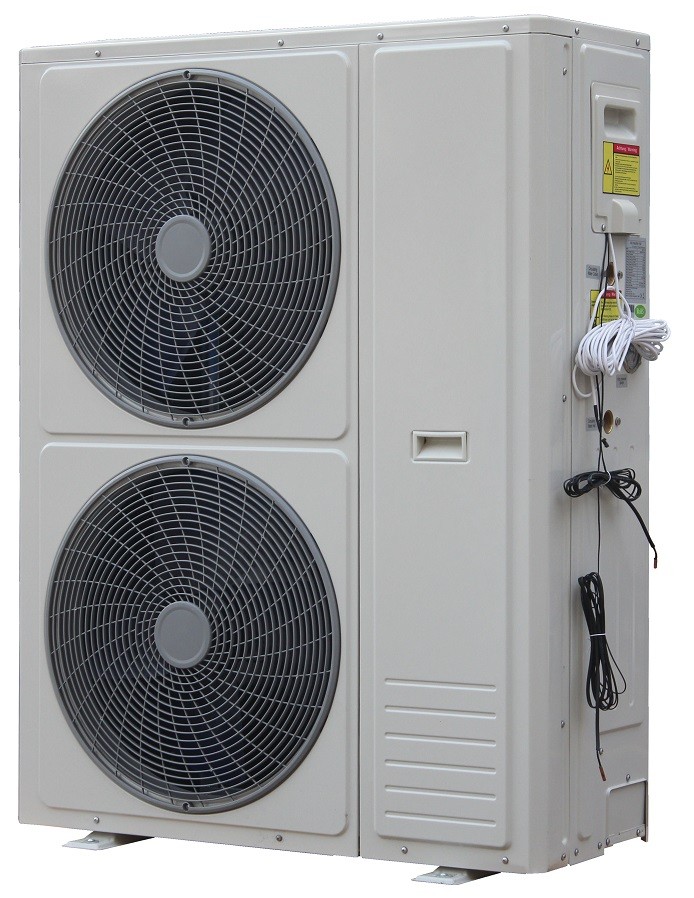
For larger properties (150–250 m²) with higher heat demand, the SHAW-15DM3/K extends the same inverter logic to 8.9–15.2 kW with a COP of 4.43 and 380V three-phase supply. The 10-year TCO advantage scales proportionally — bigger homes consume more energy, so every percentage point of efficiency saving compounds further.
Carbon Impact
Running cost is the decision driver for most homeowners, but the environmental case has become equally compelling as European grids decarbonise.
kg CO₂ per Year: Head-to-Head
| Country | Grid Intensity (kg CO₂/kWh) | HP Emissions (kg/yr) | Boiler Emissions (kg/yr) | Reduction |
|---|---|---|---|---|
| France | 0.06 (nuclear-heavy) | 257 | 3,000 | 91% |
| UK | 0.22 | 943 | 3,000 | 69% |
| Germany | 0.38 | 1,629 | 3,000 | 46% |
| EU Average | 0.25 | 1,071 | 3,000 | 64% |
Gas boiler emission factor: 0.20 kg CO₂/kWh (net calorific value, EEA 2026). Grid intensities from ENTSO-E and national TSO reports. Heat pump electricity input: 4,286 kWh (= 15,000 ÷ SCOP 3.5).
Grid Decarbonisation Effect
Here is the hidden multiplier: a gas boiler's carbon footprint is essentially fixed — it will always emit roughly 0.20 kg CO₂ per kWh of heat delivered. A heat pump's emissions are tied to the electricity grid, and European grids are cleaning up fast. The IEA projects EU average grid intensity will fall from 0.25 kg CO₂/kWh today to below 0.15 by 2030. That means a heat pump installed in 2026 will get cleaner every year for the rest of its operational life, while the boiler cannot improve.
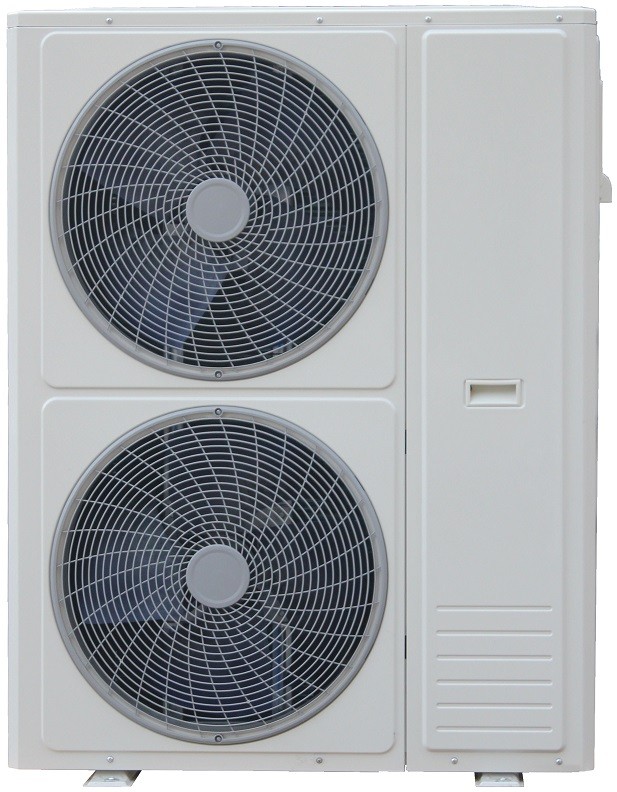
Suoher SHAW-15DM3/K — 15kW DC Inverter Heat Pump
Engineered for medium to large European homes and light commercial retrofits. Three-phase 380V supply, modulating output from 8.9 to 15.2 kW, COP up to 4.43, and quiet 58 dB operation. Ideal for properties replacing a 15–24 kW gas boiler with a right-sized low-flow-temperature system.
- Heating capacity: 8.9–15.2 kW
- COP: up to 4.43
- Noise: 58 dB(A)
- Power supply: 380V three-phase
When Gas Still Makes Sense
Despite the overall shift, there are scenarios where keeping or installing a gas boiler remains defensible in 2026:
- Poorly insulated homes with high flow-temperature radiators. If the existing radiator system requires 70°C+ flow temperatures, an air-source heat pump's SCOP drops sharply (often below 2.5), eroding the running-cost advantage. A hybrid approach (heat pump + gas boiler backup) may be more practical until insulation is upgraded.
- UK homes on the gas grid with no insulation grant. With the electricity-to-gas ratio near 3.9, the running cost break-even requires SCOP above 3.9 — difficult without low-temperature emitters. The £7,500 BUS grant offsets the capital gap, but the payback remains long if running costs are roughly equal.
- Off-grid LPG or oil replacements. In areas without mains gas, comparing against LPG or oil (which is more expensive per kWh than mains gas) makes the heat pump case even stronger — this is a "when gas still makes sense" caveat that actually points the other way.
- Short remaining boiler life. If an existing condensing boiler is only 3–5 years old and running well, the embodied carbon and capital waste of premature replacement may outweigh the annual saving. Run the numbers: if the net upfront premium after subsidy exceeds the annual saving by more than 5 years, consider waiting until end-of-life.
Switch From Gas Boiler to Heat Pump: Get Your Suoher Retrofit Quote
The 2026 data is unambiguous: for most insulated European homes with a functioning national subsidy programme, an air-source heat pump is now the lower-cost heating choice — both on annual running cost and on 10-year total cost of ownership. The gap will only widen as carbon prices rise and grids decarbonise.
If you are a homeowner, installer, or distributor planning a boiler-to-heat-pump retrofit, the next step is simple:
- Calculate your home's heat demand — use your last 12 months of gas bills (kWh) as a baseline. Divide by the boiler efficiency (typically 0.90) to get the raw heat demand.
- Match it to a Suoher unit — the SHAW-9DM1/K covers 5.1–8.9 kW for compact homes; the SHAW-15DM3/K covers 8.9–15.2 kW for larger properties. Both deliver COP above 4.4 at partial load.
- Check your national subsidy — the BEG, MaPrimeRénov', ISDE, and BUS programmes can each cover 30–70% of installed cost.
- Request a quote from the Suoher Heat Pump Team — we will provide product specifications, performance curves at your design flow temperature, and OEM/ODM customisation options for distributors.
Ready to run the numbers for your property? Send us your heat demand and location — we will return a size-matched heat pump recommendation, estimated annual saving vs your current gas boiler, and subsidy guidance for your country.
Disclaimer: All energy prices, subsidy amounts, and emission factors in this article are based on publicly available data as of 2026 H1 and are provided for general guidance only. Always verify current local tariffs and grant eligibility before making a purchasing decision. We do not guarantee specific savings outcomes, which depend on building characteristics, climate, system design, and user behaviour.