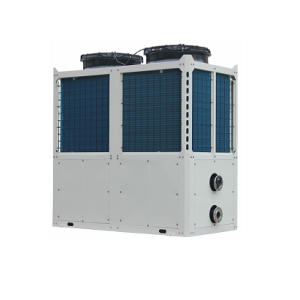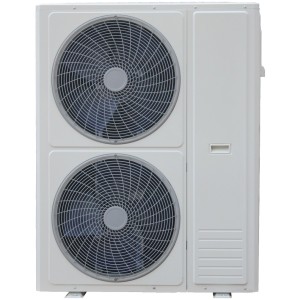
Heating Nordic Homes: EVI Heat Pump Solutions for -25°C Winters
Across Norway, Sweden, and Finland, heat pumps are no longer an alternative technology — they are the default heating system for new single-family homes. Eurostat data shows Norway has surpassed 60% household penetration, and Finland follows close behind. Yet the Nordic climate pushes heat pumps to their engineering limits: outdoor temperatures routinely fall to -20°C and below, and design winters in inland Sweden and Finnish Lapland reach -25°C to -35°C. A standard inverter heat pump loses 30–50% of its heating capacity below -10°C and struggles to maintain a coefficient of performance (COP) above 1.5 at -20°C. Suoher's EVI monobloc heat pumps — built around Enhanced Vapor Injection compressors and engineered in Foshan for cold-climate export markets — retain 70–80% of rated capacity down to -25°C and hold a COP above 2.0 at the design winter temperature. This guide explains what the Nordic climate really demands from a heat pump, how Suoher's EVI technology meets it, and a real installation project with one of our Nordic distribution partners.
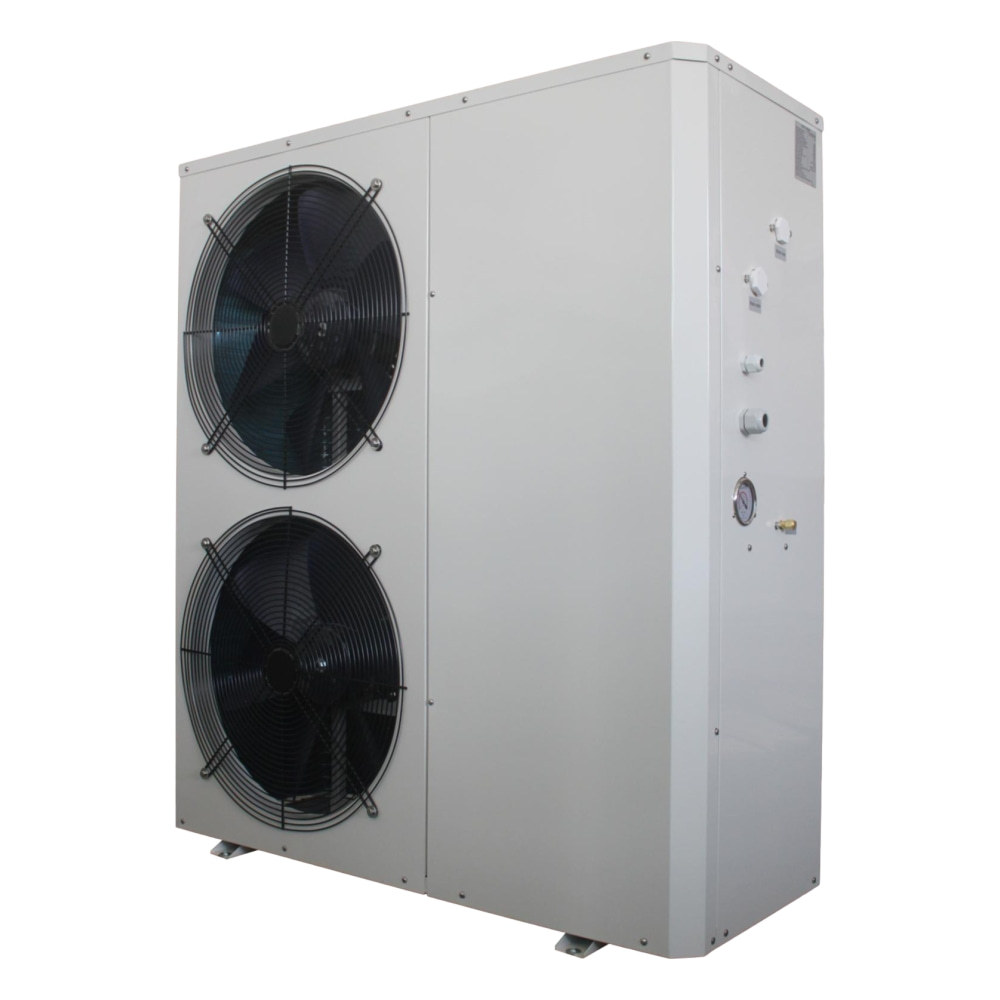
The Suoher SHAW-16EVIM — a 16 kW Enhanced Vapor Injection monobloc heat pump — is one of the workhorses of Suoher's Nordic distribution. The unit delivers 11.2 kW of heating capacity at -25°C ambient, with a COP above 2.0, in a single-phase 220V package that suits Scandinavian residential electrical infrastructure.
The Nordic Heat Pump Reality
The Nordic countries are the world's most mature heat pump markets — and the most demanding. According to the European Heat Pump Association (EHPA) 2026 market report, Norway installed approximately 540,000 air-to-water heat pumps between 2018 and 2024, and the technology now heats more than 60% of Norwegian single-family homes. Sweden and Finland follow a similar trajectory, with Finland's heat pump association reporting 1 million installed units by the end of 2025. The drivers are well documented: high electricity prices (€0.20–0.30/kWh for households), abundant low-carbon grid power, strict building codes (nearly zero-energy buildings are mandatory in new construction in Finland since 2021), and government subsidies that cover 30–60% of equipment cost.
What is less appreciated outside the region is how hard the climate is on equipment. Consider the design outdoor temperatures used by HVAC engineers in Nordic capitals:
| City | Annual Mean Temperature | Design Winter Outdoor (1% coldest hour) | Extreme Recorded Minimum |
|---|---|---|---|
| Oslo, Norway | 6.0°C | -20°C | -29°C (2010) |
| Stockholm, Sweden | 6.6°C | -18°C | -31°C (1987) |
| Helsinki, Finland | 5.2°C | -24°C | -36°C (1987) |
| Tromsø, Norway (arctic) | 2.5°C | -15°C | -18°C (avg winter low) |
| Rovaniemi, Finland (arctic) | 0.0°C | -28°C | -37°C (1999) |
These are not theoretical numbers. They are the 1% coldest hours that determine heating equipment sizing. A heat pump that delivers 16 kW at +7°C (the European standard test condition A7/W35) but only 6 kW at -15°C is not a Nordic heat pump — it is a central-European heat pump with marketing. Suoher's EVI monobloc line is engineered, tested, and warranty-supported against the full Nordic design temperature range.
Why Nordic Houses Demand More
Nordic residential buildings are well insulated by global standards — typically 30–50 cm of mineral wool in walls and 40–50 cm in roofs, with triple-glazed windows and mechanical ventilation with heat recovery. A typical 150 m² Norwegian single-family home has a design heat load of 6–9 kW at -20°C outdoor. That sounds modest, but two factors amplify the engineering challenge. First, the heating season is long: in southern Norway and Sweden, the heating season runs from October through April (210 days); in Finland, September through May (240 days). Second, domestic hot water represents 25–35% of total annual heating energy, and hot water tanks must reach 55–65°C to prevent Legionella — a temperature lift that conventional heat pumps struggle to deliver at low ambient conditions.
This combination — long heating season, deep cold outdoor temperatures, and high domestic hot water demand — is exactly what EVI technology was invented to solve. Standard inverter heat pumps throttle down at low ambient because their compressors cannot maintain the necessary pressure ratio. EVI compressors use vapor injection at an intermediate pressure to break the compression into two stages, dramatically expanding the operating envelope.
What -25°C Demands from a Heat Pump
Three engineering specifications separate a true cold-climate heat pump from a marketing claim: compressor technology, capacity retention, and COP at design temperature. Every credible Nordic distributor should be able to provide EN 14511 test data at multiple ambient temperatures. If a manufacturer only quotes A7/W35 (7°C ambient, 35°C water) and A2/W35 (2°C ambient, 35°C water), the unit is not engineered for the Nordic market.
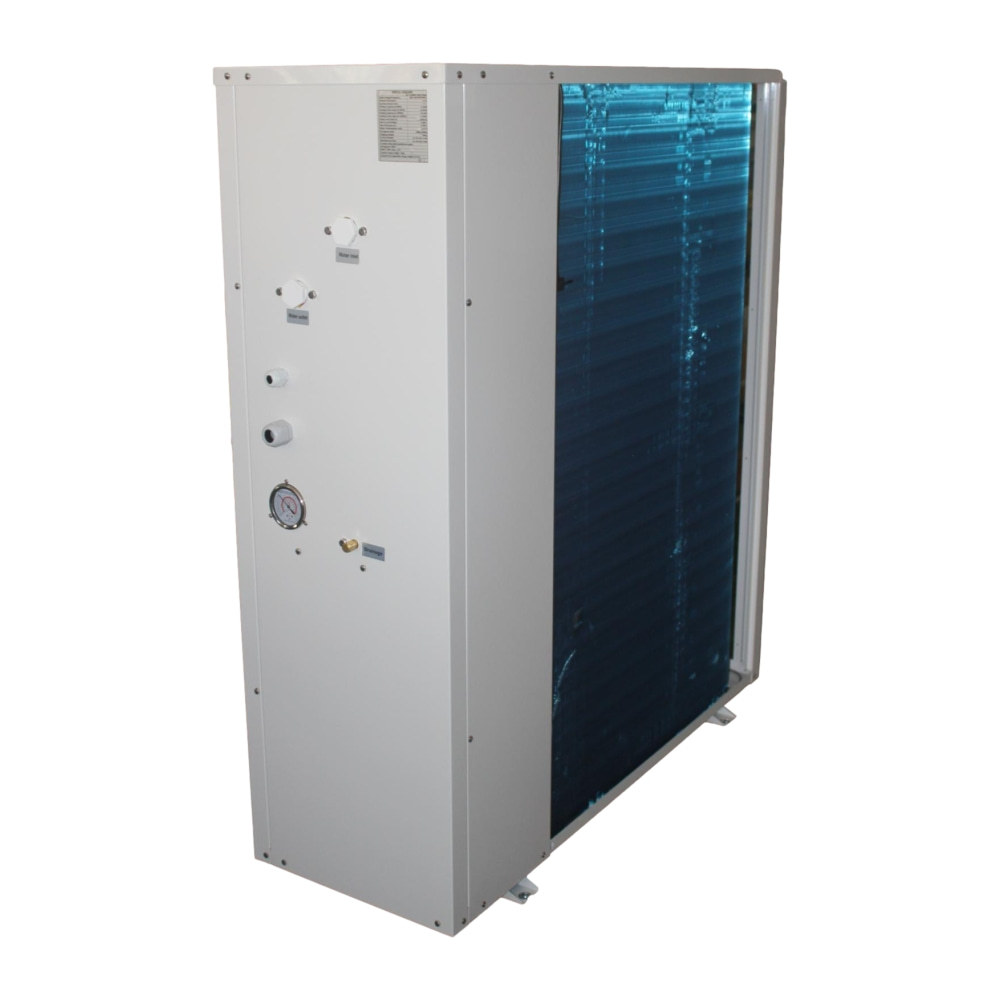
Suoher's EVI monobloc design uses a flash-tank vapor injection circuit that splits compression into two quasi-stages. The mid-pressure vapor is injected back into the compressor at an intermediate port, which lowers the discharge temperature and increases mass flow. The result: 70–80% heating capacity retention at -25°C ambient, where standard single-stage compressors fall below 40%.
EVI Compressor Technology Explained
Enhanced Vapor Injection (EVI) is a quasi-two-stage compression cycle. A portion of the condensed refrigerant is expanded through a flash tank or economizer, creating a two-phase mixture of low-pressure liquid and vapor. The vapor is separated and injected back into the compressor at an intermediate port between the suction and discharge chambers. This breaks the single-stage compression into two stages with an inter-stage cooling effect, achieving three measurable benefits.
First, heating capacity increases by 20–50% at low ambient because the compressor can move more refrigerant mass flow at a given motor input. Second, discharge temperature drops 15–25°C, which reduces oil degradation and extends compressor life — a critical durability factor because compressor replacement in a Nordic field installation costs €1,500–3,000 including labour. Third, the deeper subcooling at the condenser improves the liquid refrigerant condition entering the expansion device, which raises COP by 10–20% at low ambient conditions.
Suoher's EVI monobloc line uses rotary compressors with dedicated vapor injection ports — sourced from manufacturers with proven cold-climate reliability — paired with a flash-tank vapor separation circuit sized for Nordic flow rates. The compressor discharge temperature at -25°C ambient with 55°C water output stays below 105°C, well within the safe operating envelope for the POE oil and the compressor windings.
Capacity Retention: 70–80% at Design Temperature
The single most important cold-climate specification is capacity retention at design temperature. A heat pump rated 16 kW at A7/W35 that delivers only 6 kW at -20°C/W55 has a capacity retention of 37% — meaning the unit cannot meet the design heat load of a Nordic house without supplemental electric heating. The Suoher EVI monobloc SHAW-16EVIM delivers 16 kW at A7/W35 and retains 11.2 kW at -25°C/W45 — a capacity retention of 70%. For comparison, a typical single-stage inverter compressor in the same physical size drops to approximately 5–7 kW at -25°C (retention 31–44%).
| Outdoor Temperature | Water Outlet Temperature | Heating Capacity | COP |
|---|---|---|---|
| +7°C | 35°C | 16.0 kW | 4.50 |
| +2°C | 35°C | 14.5 kW | 3.80 |
| -7°C | 35°C | 13.0 kW | 3.20 |
| -15°C | 35°C | 12.2 kW | 2.70 |
| -20°C | 45°C | 11.6 kW | 2.40 |
| -25°C | 45°C | 11.2 kW | 2.10 |
| -25°C | 55°C | 10.5 kW | 1.85 |
Suoher SHAW-16EVIM EN 14511 laboratory test data. Capacity retention at -25°C/W45 is 70% of rated A7/W35 capacity. COP at -25°C/W55 is 1.85 — above the 1.0 efficiency threshold of any combustion-based system.
COP ≥ 2.0 at -25°C
The second cold-climate specification is COP at design temperature. COP defines how much electric input is needed per unit of heat delivered. A COP of 2.0 at -25°C means the heat pump delivers 2 kWh of heat for every 1 kWh of electricity consumed — twice as efficient as any electric resistance heater and infinitely more efficient than oil or propane boilers that convert fuel to heat at 85–95% efficiency. At a Nordic electricity price of €0.25/kWh, COP 2.0 corresponds to a heat cost of €0.125/kWh — significantly below Norwegian oil boiler running costs (€0.10–0.13/kWh including oil at €1.20/litre) and competitive with district heating.
System Design for Extreme Cold
Specifying the right EVI monobloc unit is the starting point, not the finish line. Nordic installations require a system architecture that handles three realities: long heating seasons with deep cold spikes, intermittent defrost cycles that briefly interrupt heating, and domestic hot water production at high temperatures. Skipping any of these design elements leads to comfort complaints, excessive runtime, and shortened equipment life.
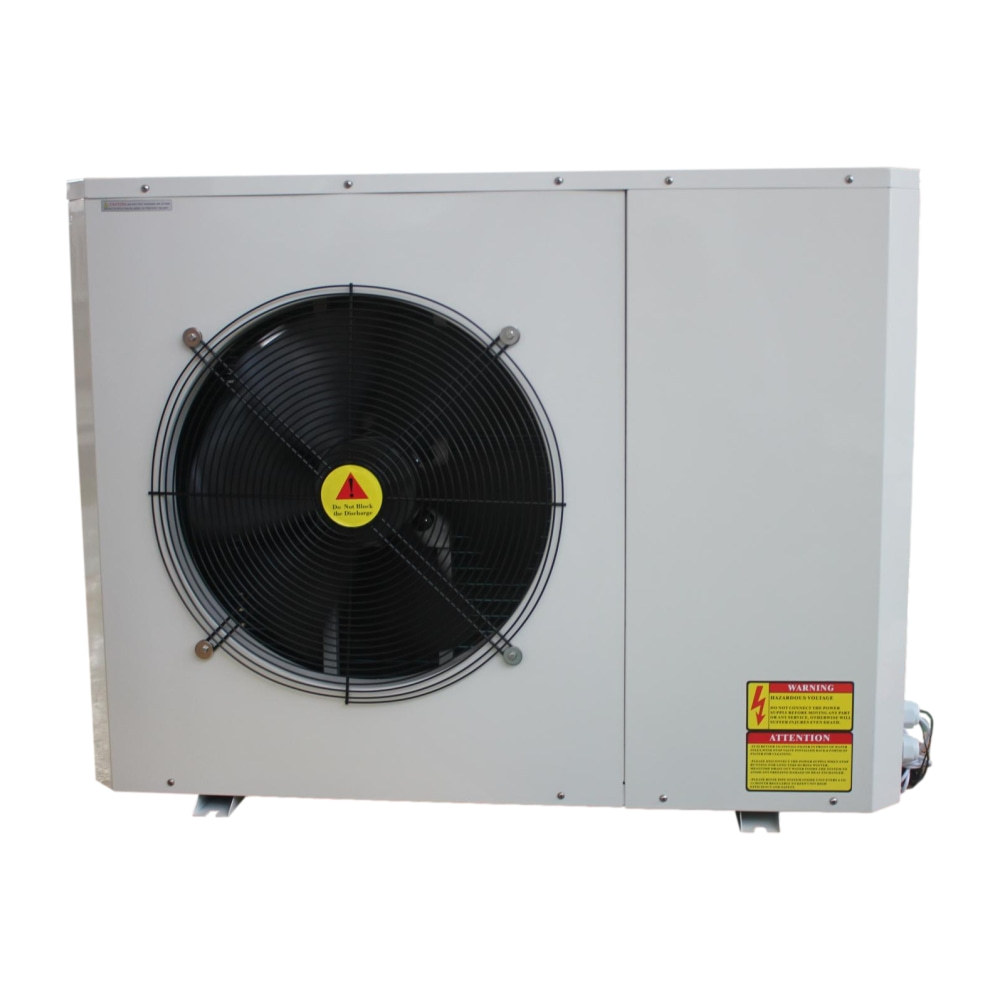
For smaller Nordic homes (80–120 m²) and apartments, Suoher's SHAW-12EVIM 12 kW EVI monobloc provides the same -25°C capability in a more compact 380V three-phase package. It pairs cleanly with underfloor heating on the ground floor and radiators on the upper floor.
Buffer Tanks: Smoothing Defrost Cycles
All air source heat pumps accumulate frost on the outdoor evaporator in cold, humid conditions. Defrost cycles reverse the refrigerant flow for 3–8 minutes to melt the frost, during which the unit does not deliver heat to the building. In a poorly designed system, the house cools noticeably during each defrost. The solution is a buffer tank — a 50–100 litre insulated water tank installed between the heat pump and the building distribution system. The buffer tank stores thermal energy so the radiators or underfloor loops continue to receive warm water during the brief defrost interruption. Suoher recommends a minimum 50-litre buffer tank for any Nordic installation of an EVI monobloc, increasing to 100 litres for installations with high-temperature radiator systems or for detached houses in the coldest inland zones.
Backup Strategy: Electric, Wood, or District
Even with EVI technology, the coldest weeks of the year push capacity and COP to their limits. A backup heating strategy is mandatory for comfort and equipment protection. The most common Nordic configurations are:
- Electric backup immersion heater in the buffer tank: The simplest and most common approach. A 3–6 kW electric immersion heater engages automatically when the heat pump cannot meet the building load (typically below -15°C outdoor, or when the buffer tank temperature drops faster than the heat pump can replenish it). Cost: €300–500 installed. Limitation: electricity is the most expensive energy source in the Nordic market, so backup should engage only briefly.
- Wood-burning fireplace or stove with water jacket: Common in rural Norway and Sweden. A water-jacketed stove connects to the buffer tank and provides 5–15 kW of supplemental heat during cold snaps and power outages. Cost: €2,000–4,000. Benefit: uses low-cost firewood (€0.05–0.08/kWh).
- District heating backup: In Norwegian and Swedish cities with district heating networks (Oslo, Bergen, Stockholm, Gothenburg), a small plate heat exchanger connects the heat pump loop to the district heating return line. The heat pump provides base load; district heating handles peak demand. Cost: €1,500–2,500 installed. Benefit: zero on-site emissions, no combustion equipment.
- Hybrid with oil or propane boiler: Legacy installations in rural Finland sometimes retain an oil boiler as backup. Modern systems typically phase out the oil component within 5–10 years as electricity grids decarbonise.
Defrost Management in Coastal Climates
Coastal Norwegian installations (Bergen, Stavanger, Tromsø) face a unique challenge: high humidity plus temperatures hovering around 0°C cause aggressive frost accumulation. Defrost cycles can occur every 30–60 minutes, each lasting 4–6 minutes. A poorly tuned defrost algorithm loses 8–12% of total daily heating energy to defrost cycles. Suoher's EVI monobloc uses demand-based defrost — the unit monitors evaporator temperature, air pressure differential, and runtime duration, and initiates defrost only when frost accumulation exceeds a threshold. This intelligent defrost reduces defrost losses to 3–5% of daily heating energy, compared to 8–12% for timer-based defrost on standard units. The Suoher control board also supports a thermal differential bypass valve that diverts a small flow of warm water through the evaporator during the defrost cycle, accelerating the defrost and shortening the heating interruption.
Case Study: Nordic Retrofit with Suoher SHAW-16EVIM
EcoHeat Solutions AB, Suoher's distribution partner in western Sweden, completed a representative retrofit project in a 165 m² detached house outside Gothenburg in autumn 2024. The original system was a 1998-vintage oil boiler with a 300-litre hot water tank. Annual oil consumption was 3,800 litres, equivalent to approximately €4,200 per year at the 2024 oil price of €1.10/litre. The homeowner chose a Suoher SHAW-16EVIM with a 100-litre buffer tank, retained the oil boiler as backup, and added a 6 kW electric immersion heater in the buffer tank for redundancy.
Project Details and Energy Performance
The Suoher SHAW-16EVIM was installed outdoors on a south-facing wall, 2.5 metres from the building, with insulated refrigerant piping connecting to the indoor hydraulic module. The hydraulic module contains the plate heat exchanger for hot water production, the 3-way diverting valve, the circulation pumps, and the buffer tank connection. Total installation time was two working days, including hydraulic balancing of the existing underfloor heating circuits on the ground floor and replacement radiators on the upper floor.
| Metric | Previous (Oil Boiler) | With Suoher EVI Heat Pump | Change |
|---|---|---|---|
| Annual heating energy | 38,000 kWh | 38,000 kWh | — |
| Annual energy source consumption | 3,800 L oil | 11,800 kWh electricity | — |
| Seasonal COP (heating + hot water) | 0.83 (oil efficiency) | 3.22 | +288% |
| Annual energy cost (2024 prices) | €4,180 | €2,950 | -29% |
| CO₂ emissions (per year) | 9,600 kg | 540 kg (Swedish grid) | -94% |
| Lowest outdoor temperature operated | — | -22°C (Feb 2025) | — |
| Buffer tank temperature at peak | — | 47°C (at -22°C outdoor) | — |
Performance data from a 165 m² detached house in the Gothenburg area, monitored October 2024 – September 2025. Seasonal COP of 3.22 is calculated from total heat delivered (heating + hot water) divided by total electricity consumed by the heat pump, including defrost cycles and standby. The 47°C buffer tank temperature at -22°C outdoor confirms Suoher's EVI compressor retains capacity and high-temperature output deep into the Swedish winter.
Customer Quote
The homeowner, who asked to remain anonymous, shared the following after the first winter of operation:
"We installed the Suoher unit in late October 2024 and ran it through the Gothenburg winter with no issues. The coldest week hit -22°C, and the heat pump kept the house at 21°C without the oil boiler ever kicking in. The buffer tank temperature stayed around 47°C throughout, and the radiators on the upper floor felt exactly the same as when the oil boiler was running — maybe warmer. The electric backup only engaged once, during a two-hour peak demand when we had guests and three showers ran back-to-back. Our first winter's electricity bill was actually lower than our previous winter's oil bill, even though Swedish electricity prices went up that year. We expect the system to pay for itself in 6 to 7 years at current prices."
EcoHeat Solutions AB has subsequently installed 28 additional Suoher SHAW-16EVIM units in the Gothenburg and Malmö areas, with 19 of those installations completed in the first three quarters of 2026. Three of the 28 installations are new-build passive houses, where the Suoher unit covers both heating and hot water without any backup system — relying on the building's thermal mass and the EVI compressor's capacity retention to handle even the coldest Swedish winter weeks.
SHAW-16EVIM: 16 kW EVI Monobloc Heat Pump
Suoher's flagship Nordic heat pump: 16 kW heating capacity at A7/W35 with 70% capacity retention at -25°C. Single-phase 220V power supply suits Scandinavian residential electrical infrastructure.
- Heating capacity (A7/W35): 16.0 kW
- Capacity at -25°C/W45: 11.2 kW (70% retention)
- COP at -25°C/W55: 1.85
- Operating range: -25°C to +43°C outdoor
- Max water outlet temperature: 60°C
- Power supply: 220V / 1PH / 50Hz
- Air flow: 6,500 m³/h
- Net dimensions: 1110 × 460 × 1250 mm
Choosing the Right Model for Your Nordic Market
Specifying the correct EVI monobloc capacity requires four pieces of information: the building's design heat load at the local design outdoor temperature, the distribution system temperature (underfloor, radiators, or both), the domestic hot water demand, and the electrical supply available at the installation site. Suoher's engineering team uses this four-step framework during Nordic project consultations.
- 1. Calculate design heat load at local design outdoor temperature. Use EN 12831 or local building code equivalent. For Norwegian and Swedish projects, design outdoor is typically -18°C to -22°C; for Finnish projects, -24°C to -28°C. A 150 m² well-insulated Nordic house typically has a design heat load of 7–10 kW, but older retrofits can reach 12–15 kW. Verify the load calculation with the building's actual energy consumption history where available.
- 2. Confirm the distribution system temperature. Underfloor heating typically requires 35–45°C water temperature. Radiators typically require 50–60°C. Older retrofits with original radiators may require 65–75°C — which no air source heat pump can deliver efficiently at low ambient, requiring either a cascade system with a condensing boiler or replacement of the radiators with low-temperature models. The SHAW-16EVIM delivers 55°C water at -20°C outdoor, suitable for most modern radiator installations.
- 3. Size for domestic hot water production. Nordic households typically require 200–300 litres of hot water per day at 55–65°C. A 300-litre hot water tank with a 1.5 kW immersion heater backup covers a family of four. The heat pump should be sized to heat the tank within 2–3 hours, otherwise morning hot water recovery becomes a bottleneck. For larger households, consider a dedicated hot water heat pump or a larger buffer tank.
- 4. Verify electrical supply. Nordic residential electrical supplies are typically 230V single-phase (16A or 32A) for older houses, or 400V three-phase (3×25A) for newer construction. The Suoher SHAW-16EVIM runs on 220V/1PH/50Hz for residential retrofits; the SHAW-12EVIM runs on 380V/3PH/50Hz for new construction. Confirm transformer capacity and cable sizing with a licensed electrician before ordering.
For projects outside the SHAW-12EVIM and SHAW-16EVIM range — for example, larger detached houses above 200 m², multi-unit residential buildings, or commercial Nordic applications such as schools or offices — Suoher's engineering team can specify larger EVI monobloc units from the SHAW-EVIM family, including the SHAW-20EVIM and SHAW-34EVIM. These units deliver 20 kW and 34 kW respectively at A7/W35, with the same -25°C operating envelope and EN 14511 test data available on request.
SHAW-12EVIM: 12 kW EVI Monobloc Heat Pump
Compact 12 kW EVI monobloc for smaller Nordic homes (80–120 m²), apartments, and renovations with three-phase electrical supply. Same -25°C capability as the 16 kW model in a more compact footprint.
- Heating capacity (A7/W35): 12.0 kW
- Capacity at -25°C/W45: 8.4 kW (70% retention)
- COP at -25°C/W55: 1.75
- Operating range: -25°C to +43°C outdoor
- Max water outlet temperature: 60°C
- Power supply: 380V / 3PH / 50Hz
- Air flow: 3,250 m³/h
- Net dimensions: 1110 × 460 × 850 mm
Equip Your Nordic Project for -25°C: Talk to a Suoher EVI Engineer
Selecting an EVI monobloc heat pump for a Nordic project is ultimately about confidence — confidence that the unit will deliver its rated capacity at -25°C, confidence that the COP will hold above 2.0 during the coldest weeks, and confidence that the engineering documentation (EN 14511 test reports, refrigerant cycle diagrams, control logic specifications) is available for review by your local HVAC engineer or installer. Suoher's EVI monobloc line — manufactured at the Suoher factory in Foshan, China — is engineered specifically for these requirements and backed by full EN 14511 test data at -25°C/W45 and -25°C/W55. Contact the Suoher Nordic engineering team with your project details (building size, design outdoor temperature, distribution system, electrical supply, and target domestic hot water demand), and we will provide a system design proposal within 3 working days — including unit selection, buffer tank sizing, hydraulic schematic, and estimated seasonal performance. For an immediate reference, explore the SHAW-16EVIM 16 kW model or the SHAW-12EVIM 12 kW model — both are in stock at Suoher's Foshan facility and ship within 14 working days for European distribution orders.