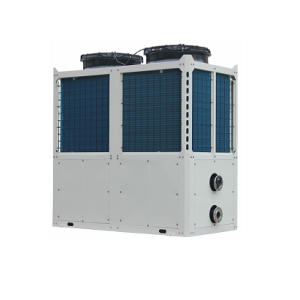
How to Choose a Swimming Pool Heat Pump: Inverter, Titanium, Noise and More
The 8-Point Pool Heat Pump Checklist
A pool heat pump is the cheapest way to heat a swimming pool over a full season — but only if you buy the right one. The wrong unit runs 30–40% more electricity than it should, corrodes within three seasons in a saltwater pool, or sits so loud that nobody wants to swim near it. Before you compare prices, work through these eight points in order, because each one protects a different part of your running cost and lifespan.
- Size the heating capacity to your pool volume and heat loss
- Choose inverter (variable-speed) over fixed-speed for most pools
- Insist on a titanium heat exchanger for any saltwater or chlorinated pool
- Check the sound power rating against your siting distance
- Verify the COP at your real operating water temperature, not the marketing maximum
- Confirm the controller brand and Wi-Fi app support for your region
- Validate certifications (CE, ErP, UL/ETL) for your target market
- Read the warranty exclusions, not just the headline years
If you have not yet calculated the kilowatts your pool needs, start with our pool heat pump sizing guide — a unit that is 20% undersized will never reach set point in spring, and one that is 30% oversized wastes money upfront and short-cycles into early failure. The checklist below assumes you already know the kW range; the rest of this guide explains how to evaluate the units that fit it.
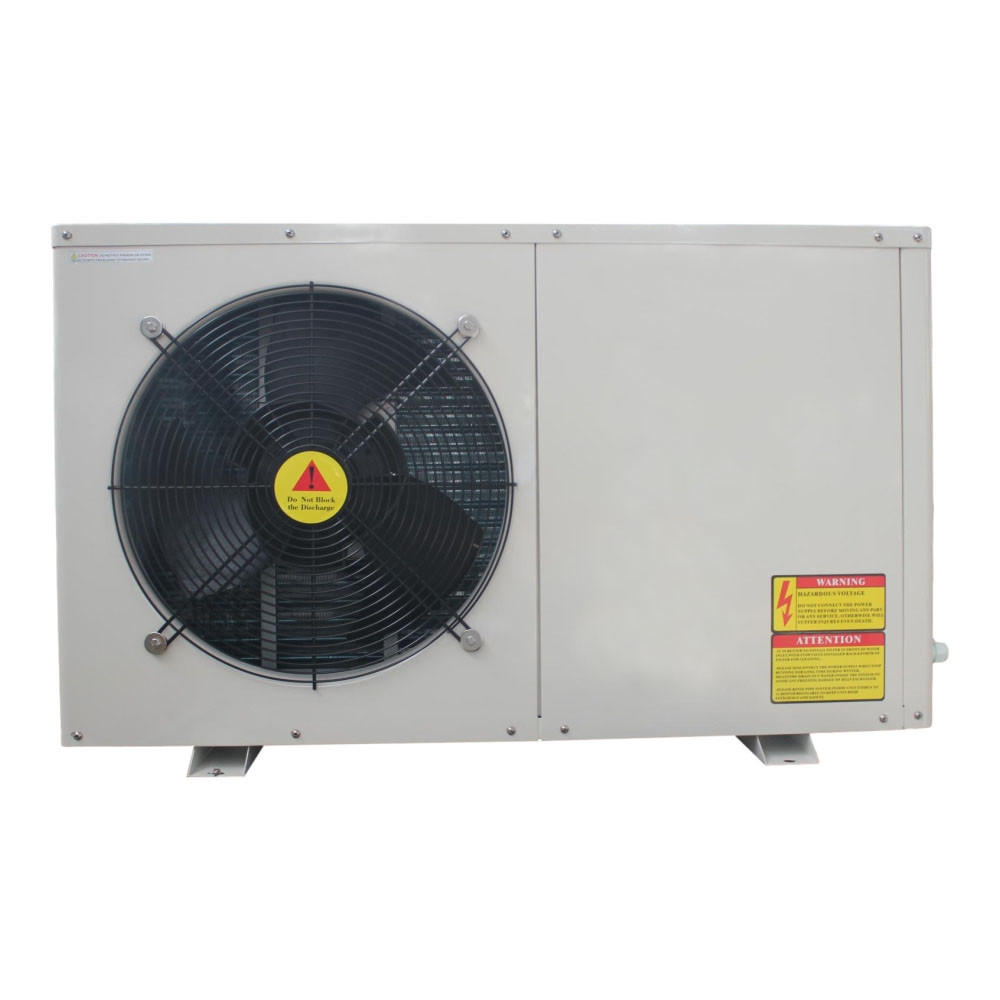
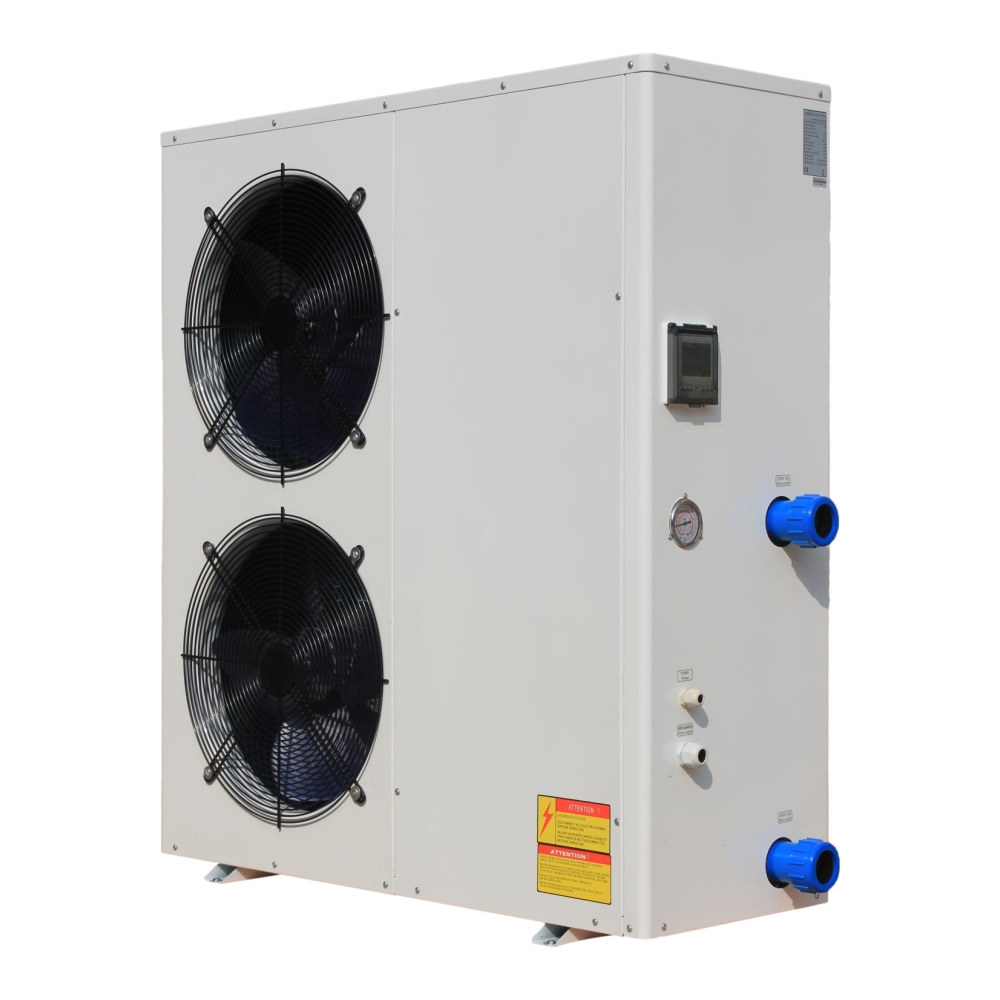
A typical 11–13 kW residential pool heat pump (Suoher SHPH-13CH class). Sizing, exchanger material and noise decide whether it runs cheaply for a decade or becomes a regret.
Inverter vs Fixed-Speed Pool Heat Pumps
This is the single biggest efficiency decision on the list. A fixed-speed (on/off) pool heat pump runs its compressor at 100% or 0%. When the water reaches set point it cuts out; when it drops 1–2 °C it bangs back on at full power. An inverter (DC inverter) pool heat pump modulates compressor speed from roughly 20% to 100%, holding the water within 0.5 °C by running slow and steady most of the time.
The payoff is large: inverter units use 30–50% less electricity over a season than fixed-speed units of the same nameplate kW, because pool heat loss is continuous and low-grade — exactly the load profile where variable-speed shines. Field data from ENERGY STAR-qualified pool heat pumps shows a seasonal COP advantage of roughly 1.0–1.5 points for inverter models versus fixed-speed at the same test condition. That gap widens in mild climates where the unit spends most of its life at part load.
Noise levels
Because an inverter unit spends most of its time at 30–50% speed, its day-to-day sound is 6–10 dB quieter than a fixed-speed unit cycling on and off at full fan speed. That matters most in residential backyards where the unit sits 3–5 m from a patio or bedroom window. Suoher's DC inverter pool heat pumps hold 40–48 dB(A) at 1 m at part load, versus 55–60 dB(A) for a fixed-speed unit of equivalent capacity — the difference between "barely noticeable" and "annoying every evening".
Efficiency at partial load
COP rises as compressor speed falls, because the heat exchanger has more surface area per watt of heat being moved. A unit rated COP 5.0 at 100% speed can hit COP 6.0–7.0 at 40% speed on a mild day. This is why an inverter unit with a slightly lower nameplate COP can still outperform a fixed-speed unit carrying a higher sticker number. Always compare units at matched part-load conditions, not at the marketing maximum that only exists on a 27 °C summer afternoon.
40 kW DC Inverter Pool Heat Pump
Model: SHPH-40DC3
- Heating capacity: 28–40 kW (modulating)
- COP: 4.8–6.3 across the load range
- Titanium heat exchanger — saltwater-safe
- R32 refrigerant, Wi-Fi smart controller
- Max water temp 40 °C, water flow 17.2 m³/h
- 380 V / 3-phase, 165 kg net
A full inverter commercial pool unit that brings together every checklist box that matters: variable-speed compressor for part-load COP, pure-titanium exchanger for saltwater durability, and an app-driven controller for remote scheduling. The reference build for large residential and small commercial pools.
View ProductHeat Exchanger Material Matters
The heat exchanger is where pool water meets the refrigerant circuit. Get this wrong and the unit corrodes, leaks refrigerant, or poisons the pool water within a few seasons. Three materials dominate the market, and the choice is not cosmetic — it decides whether the unit lasts three years or fifteen.
Titanium vs stainless steel vs PVC
- Titanium: the gold standard for any pool. Chemically inert to chlorine, salt and most pool chemicals. A pure-titanium tube-in-tube exchanger lasts 10–15 years even in aggressive water. Slightly higher upfront cost, but the only safe choice for saltwater pools.
- Stainless steel (316L): acceptable for fresh-water, lightly chlorinated pools in non-coastal areas. Pits and cracks in saltwater, high-chlorine or low-pH water. Cheaper, but a false economy anywhere near the coast.
- PVC shell with titanium coil: the practical compromise most quality pool heat pumps actually ship. PVC gives structural shape and insulation; the titanium coil carries the refrigerant-to-water heat transfer. This is the construction used across Suoher's SHPH-CH and SHPH-DC pool ranges.
A 26 kW SHPH-26CH pool unit — the PVC-plus-titanium exchanger is visible at the base. This hybrid construction is what makes a pool heat pump survive a decade of chlorinated water.
Corrosion in saltwater pools
Saltwater electrolysis generates free chlorine and raises the chloride concentration at the exchanger wall. Stainless steel 316L begins to pit at chloride levels above roughly 300 ppm — well inside the normal saltwater pool range of 2,500–4,500 ppm. Once pitting starts it accelerates: the pit becomes a local anode, metal erodes, and a pinhole leak follows within a season or two. Titanium, by contrast, forms a passive titanium-oxide film that resists these chlorides indefinitely. If your pool runs a salt chlorinator or is filled with seawater, titanium is not an upgrade — it is the only material that survives. We break down the chemistry in detail in our existing titanium heat exchanger analysis.
Noise: What dB Rating to Expect
Sound power (the total acoustic energy the unit radiates, in dB(A)) is the number to compare — not "sound pressure at 10 m", which manufacturers can massage by choosing the measuring distance. A 6 dB drop is perceived as roughly "half as loud", so the spread between units matters more than any single number.
| Unit type | Sound power dB(A) | Real-world impression |
|---|---|---|
| Mini inverter (3 kW) | 38–42 | Quieter than a fridge; fine on a small patio |
| Residential inverter (9–16 kW) | 44–50 | Low hum; acceptable 3 m from a bedroom window |
| Residential fixed-speed (9–16 kW) | 55–60 | Loud on/off cycling; needs 5–8 m setback |
| Commercial (40–105 kW) | 58–66 | Plant-room level; locate away from guest areas |
Place the unit at least 3–5 m from any openable window and point the fan discharge away from the neighbour. Units under 50 dB(A) sound power suit dense residential plots; commercial units routinely run 60+ dB(A) and need a dedicated equipment pad with setback. A quiet mini inverter like the Suoher SHPH-3MH (3 kW, 110 V) is the answer for small above-ground pools where the unit sits right next to the swim area.
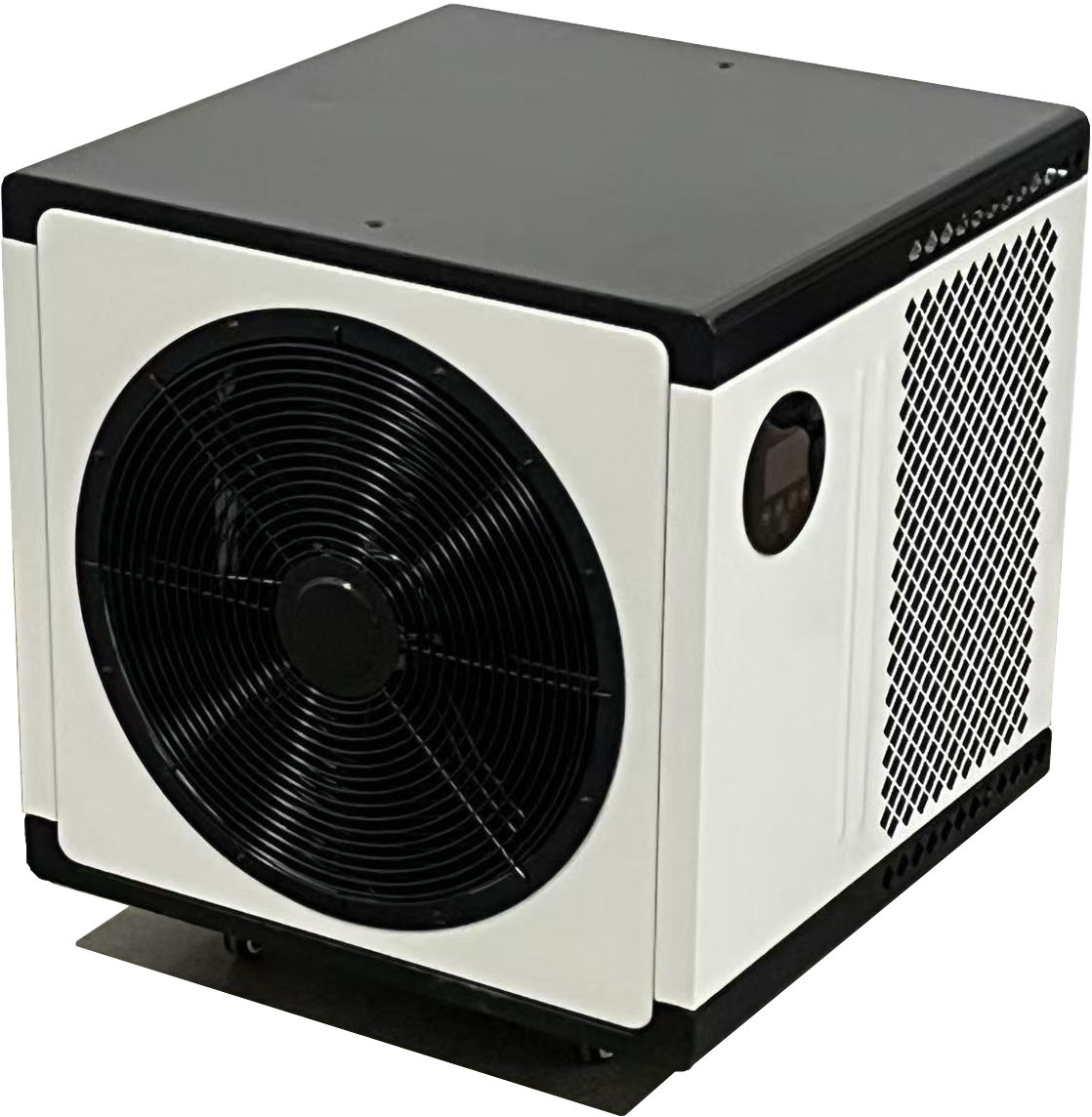
The Suoher SHPH-3MH mini pool heat pump — compact, 110 V, and quiet enough to sit beside a small above-ground pool without a sound-deadening enclosure.
COP, Temperature Range and Wi-Fi Control
COP (Coefficient of Performance) is the ratio of heat delivered to electricity consumed — a COP of 5.0 means 5 kW of heat for every 1 kW of electricity. But the number only means something at a stated air and water temperature. Marketing COPs are often quoted at 26–27 °C air and 26–27 °C water — the easiest possible condition on a hot summer day. Real running COP at 15 °C air and 28 °C water is 20–30% lower, and that is the number that decides your spring electricity bill.
Temperature range matters for shoulder-season heating. A unit that cuts out at 10 °C air cannot heat your pool in early spring or late autumn — it simply stops. Look for a working range down to -5 °C up to +43 °C so the season extends from March to November in temperate climates rather than just July and August.
Wi-Fi control is no longer a gimmick. Modern inverter pool heat pumps ship with a smart controller and app (Tuya, Xmarto, or a proprietary platform). The value is scheduling: pre-heat before the weekend, drop to eco mode during the week, and monitor water temperature remotely from a phone. Confirm the controller brand and that the app is supported in your region, because some unbranded controllers lose cloud connectivity within two or three years and leave you with a dumb on/off timer.
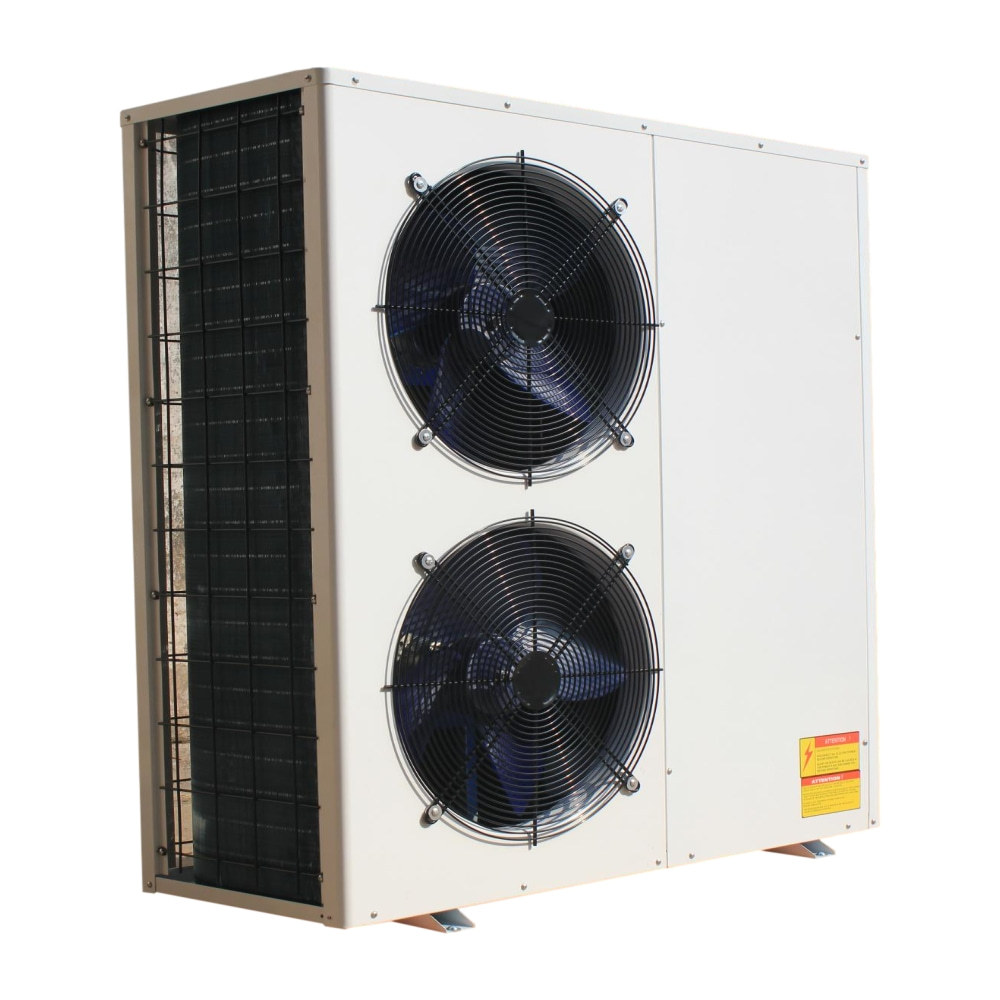
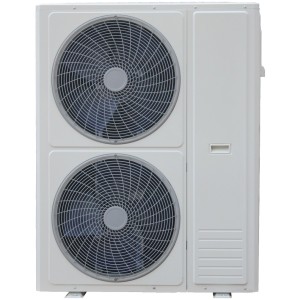
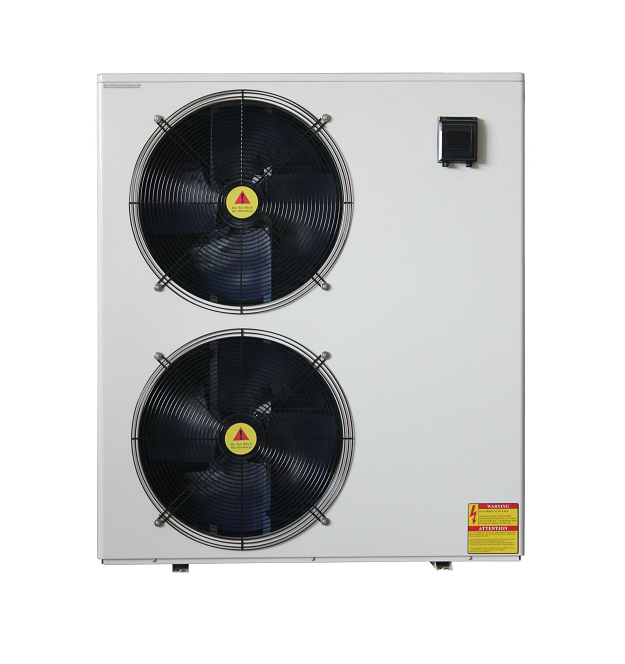
A dual-fan 26 kW SHPH-26CH unit for larger residential pools. Dual fans raise airflow for bigger heat loads while keeping each fan speed — and noise — lower than a single high-speed fan.
Brand, Warranty and Certifications
A pool heat pump is a 10-year purchase, so the company behind it matters as much as the spec sheet. Check who makes the compressor (Panasonic, GMCC, Landa/Gree are the common names), where the unit is assembled, and whether the brand offers parts support in your country five years from now.
CE, ErP, UL/ETL
- CE: mandatory to sell in the EU/EEA. Confirms electrical safety and electromagnetic compatibility.
- ErP: the EU eco-design regulation sets a minimum seasonal COP and a maximum sound power for pool heat pumps. ErP-compliant units above a certain capacity must also declare a seasonal SCOP, not just a peak COP.
- UL/ETL: the North American safety marks. Required for US and Canada market access and for many insurance and permitting processes.
- ENERGY STAR: a voluntary US programme; qualifying pool heat pumps must exceed a minimum integrated-energy-efficiency benchmark across the season.
Warranty terms
Read the exclusions, not the headline. A "5-year warranty" that excludes the heat exchanger after year 2, or requires annual dealer service stamps, is not the same as a 5-year all-parts cover. Look for: compressor (3–6 years), heat exchanger (2–5 years, ideally longer on titanium), and general parts (1–2 years). Saltwater or non-OEM-chemical use voids some warranties entirely — confirm the small print before you buy, not after a claim is denied.
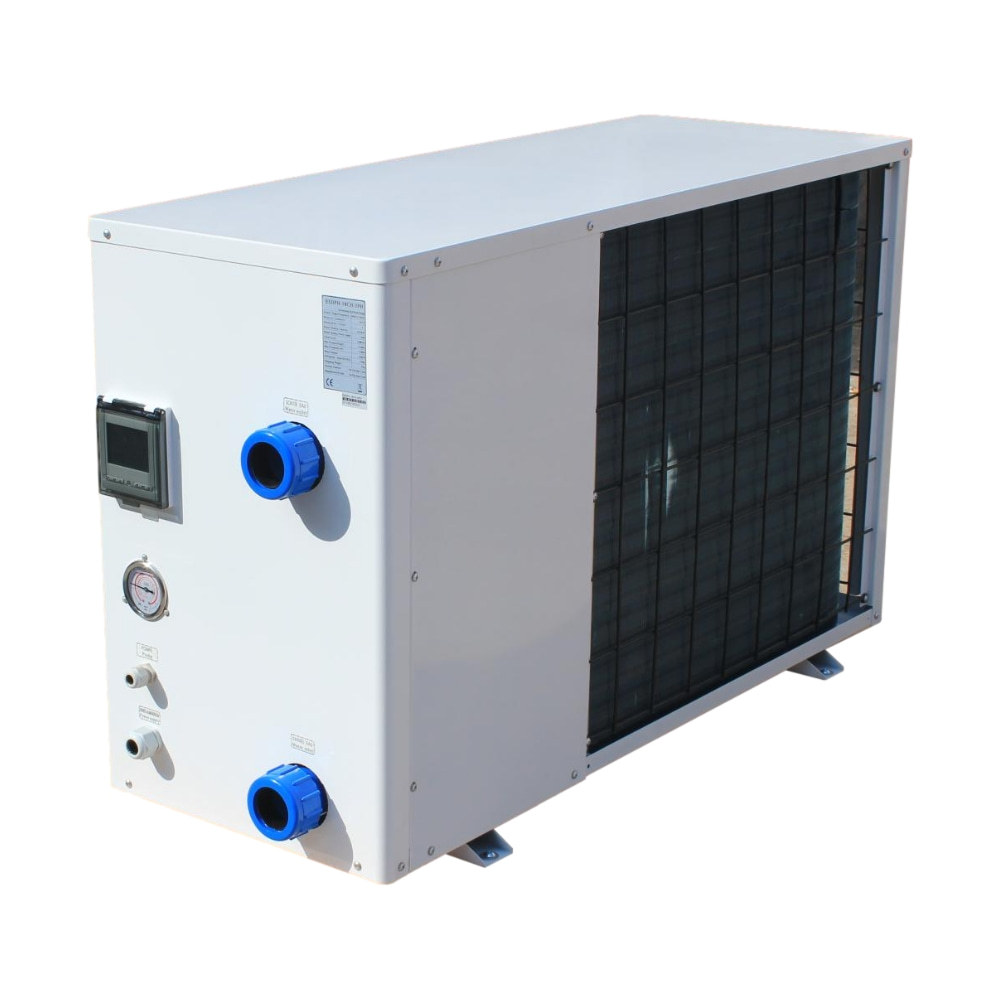
16 kW Pool Heat Pump — Panasonic Scroll
Model: SHPH-16CH
- Heating capacity: 16 kW
- Compressor: Panasonic (scroll)
- Condenser: PVC + titanium heat exchanger
- Fan motor: 50 W, low-speed quiet operation
- Net dimensions: 1110 × 460 × 700 mm
- OEM/ODM branding available
A workhorse mid-capacity pool unit pairing a name-brand Panasonic scroll compressor with a PVC-plus-titanium exchanger — the combination that delivers brand-backed reliability and saltwater durability at a mid-range price. Ideal for 60–80 m³ residential pools.
View ProductRed Flags to Avoid
Most pool heat pump regrets trace back to one of these seven warning signs. If a listing shows two or more, walk away.
- Nameplate COP quoted with no air or water temperature attached.
- "Stainless steel heat exchanger" sold for a saltwater or salt-chlorinated pool.
- No sound power (dB) rating — only the words "quiet operation".
- Controller with no brand name, no app-store listing, no region support.
- Price 40%+ below comparable inverter units — usually a fixed-speed unit relabelled as "inverter-ready".
- Warranty that excludes the heat exchanger or voids entirely on saltwater use.
- No CE/ErP (EU) or UL/ETL (North America) marking for your market.
Send Your Pool Volume — Get a Matched Heat Pump Quote Within 24 Hours
You now have the eight-point checklist, the material logic, the noise benchmarks and the red flags — everything you need to filter out the wrong units. The last step is matching one to your exact pool. Send us your pool volume (m³), whether it is fresh or saltwater, your climate zone, and the setback distance to the nearest neighbour, and Suoher's project engineering team in Foshan will return a matched model recommendation with a COP-at-your-temperature estimate and an OEM/ODM quote if you are buying for distribution.
The Suoher factory builds the full pool heat pump range on one line — from 3 kW mini inverter units to 105 kW commercial verticals — all with titanium exchangers and CE/ErP documentation ready for export. Request a matched pool heat pump quote here, or browse the complete swimming pool heat pump range to compare models side by side.