Monobloc vs Split Heat Pumps: Which Configuration Is Right for Your Project?
Specifying an air-to-water heat pump for a residential retrofit or a small commercial project usually comes down to one decision first: monobloc or split. Both configurations move the same heat, in roughly the same ambient range, with similar seasonal efficiency. The differences show up at install time, on the project schedule, and - increasingly - under EU F-Gas Regulation 2024/573, where split and monobloc take very different compliance paths through 2027 and 2035. This buyer's guide compares them side by side so installers, distributors, and OEM project teams can pick the right configuration before they quote.
1. Two configurations, one principle
An air-to-water heat pump takes low-grade heat from outdoor air, upgrades it with a vapour-compression cycle, and delivers it to a hydronic distribution loop - underfloor heating, fan coils, radiators, or a domestic hot water cylinder. The thermodynamics are identical whether the refrigerant loop stays outside in a single box, or gets split between an outdoor unit and an indoor hydraulic module.
That is the only thing identical. Everything that the installer, the homeowner, or the warranty engineer touches afterwards - the refrigerant piping, the commissioning checklist, the service interval, the regulatory paperwork - differs sharply between monobloc and split designs. Suoher's EVI monobloc line-up addresses the all-outside case; most split-equivalent projects use a matched outdoor unit paired with an indoor hydrobox from a third party. Choose with that boundary in mind.
Wall-mounted monobloc installation: a single Suoher SHAW-16EVIM unit supplies hydronic heat and hot water; no refrigerant runs inside the building envelope.
2. How a monobloc air-to-water heat pump is built
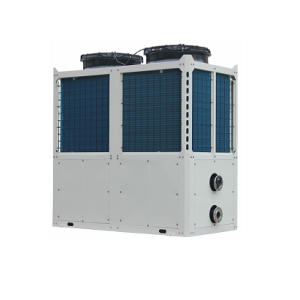
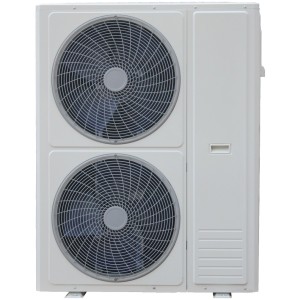
A monobloc - French for "one block" - packs every heat-pump component, including the plate heat exchanger and the water-side pump, into a single outdoor cabinet. Hot water leaves the cabinet on a hydronic pipe, runs through the wall, and feeds the heating loop directly.
Single outdoor unit, single water connection
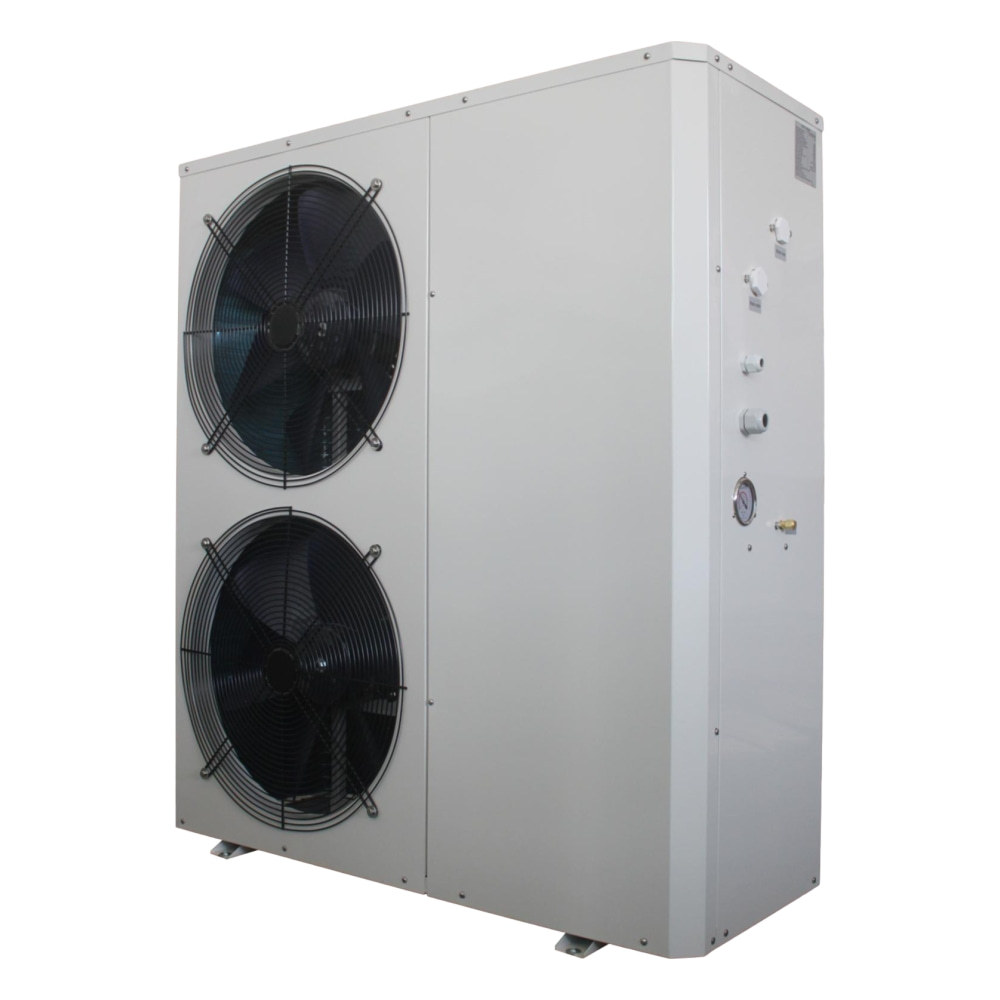
Inside the cabinet you typically find: an EVI (enhanced vapour injection) scroll compressor, a fin-and-tube outdoor coil, a plate heat exchanger for the refrigerant-to-water side, a variable-speed circulating pump, an expansion vessel, and the control board. Two hydraulic pipes (flow and return) plus a power cable are the only building penetrations. Suoher's SHAW-12EVIM is exactly this layout: 12 kW heating capacity, 380 V three-phase supply, a 90 W fan, and a 1110 x 460 x 850 mm footprint that fits next to a typical service-yard wall.
Pros: simpler install, no on-site refrigerant work
Because the refrigerant circuit is factory-sealed and pre-charged, the installer never opens the refrigeration loop on site. There is no brazing, no pressure-decay leak test on the building side, no F-Gas registration of an in-building connection. A competent plumbing/heating technician can commission a monobloc in roughly half a day, with most of that time spent on hydraulic balancing.
Cons: a larger outdoor footprint, exposed weather
The trade-off is footprint: a monobloc is roughly 1.5-2x larger than an equivalent split outdoor unit, because it houses the water-side heat exchanger and pump as well. In tight urban courtyards or noise-sensitive neighbourhoods, that size has to be designed around. Outdoor placement also means the unit sees the full weather load - installers in cold climates should specify a model with low-ambient capability and a tested defrost strategy.
Compact all-outdoor monobloc for 3-5 bed homes and light commercial projects. Factory-sealed refrigerant loop, sensor-driven defrost, and a small 1110 x 460 x 850 mm cabinet that suits tight urban installs.
3. How a split air-to-water heat pump is built
A split configuration splits the refrigeration loop across two units: an outdoor unit containing the compressor, coil and reversing valve; and an indoor hydrobox containing the plate heat exchanger, pump, expansion vessel, and control PCB. The two are connected by insulated refrigerant pipes - usually 1/4" and 1/2" or 3/8" and 5/8" depending on capacity - running through the wall.
Indoor hydrobox plus outdoor unit
The indoor hydrobox is normally installed in the plant room or utility cupboard and connects directly to the buffer tank, the DHW cylinder, and the underfloor or radiator loop. Because the hydrobox lives inside, it is unaffected by ambient temperature, and the compressors can run more efficiently in mild conditions. The outdoor unit can be smaller and lighter than an equivalent monobloc, which makes retrofitting on external walls or balconies easier.
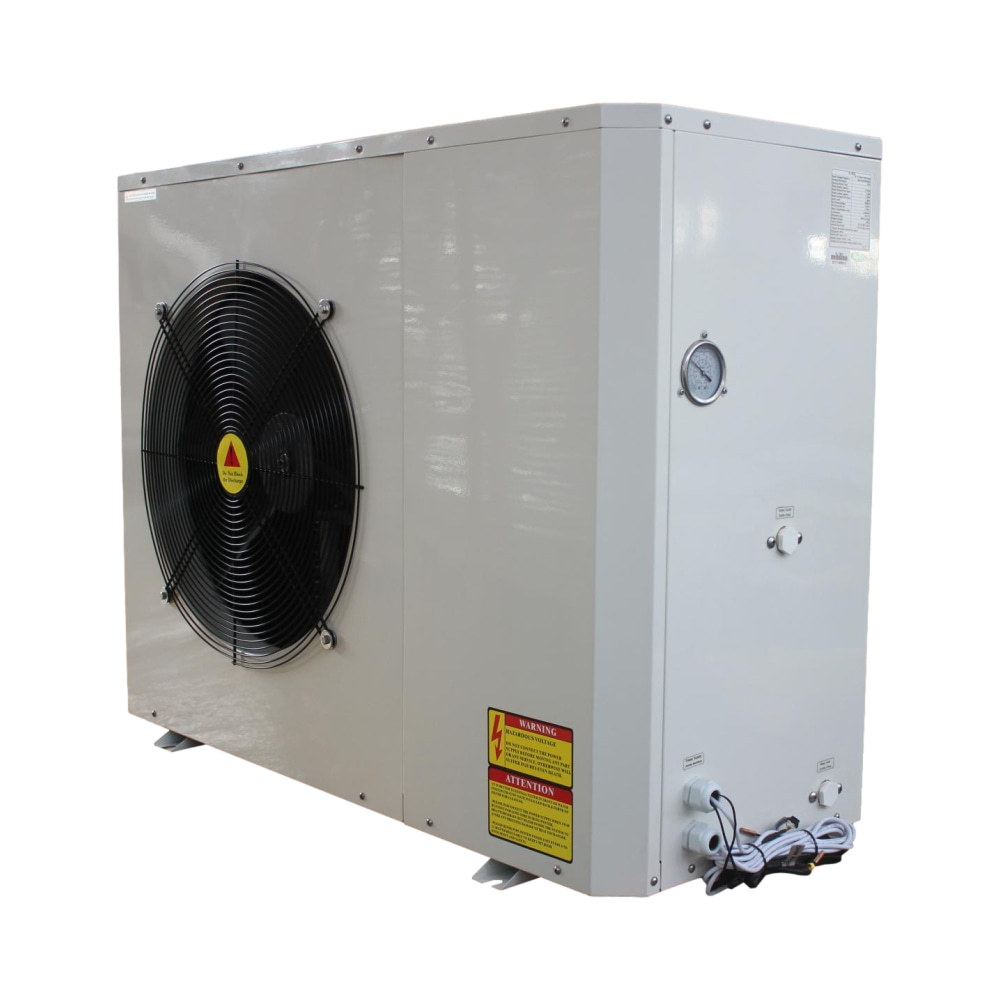
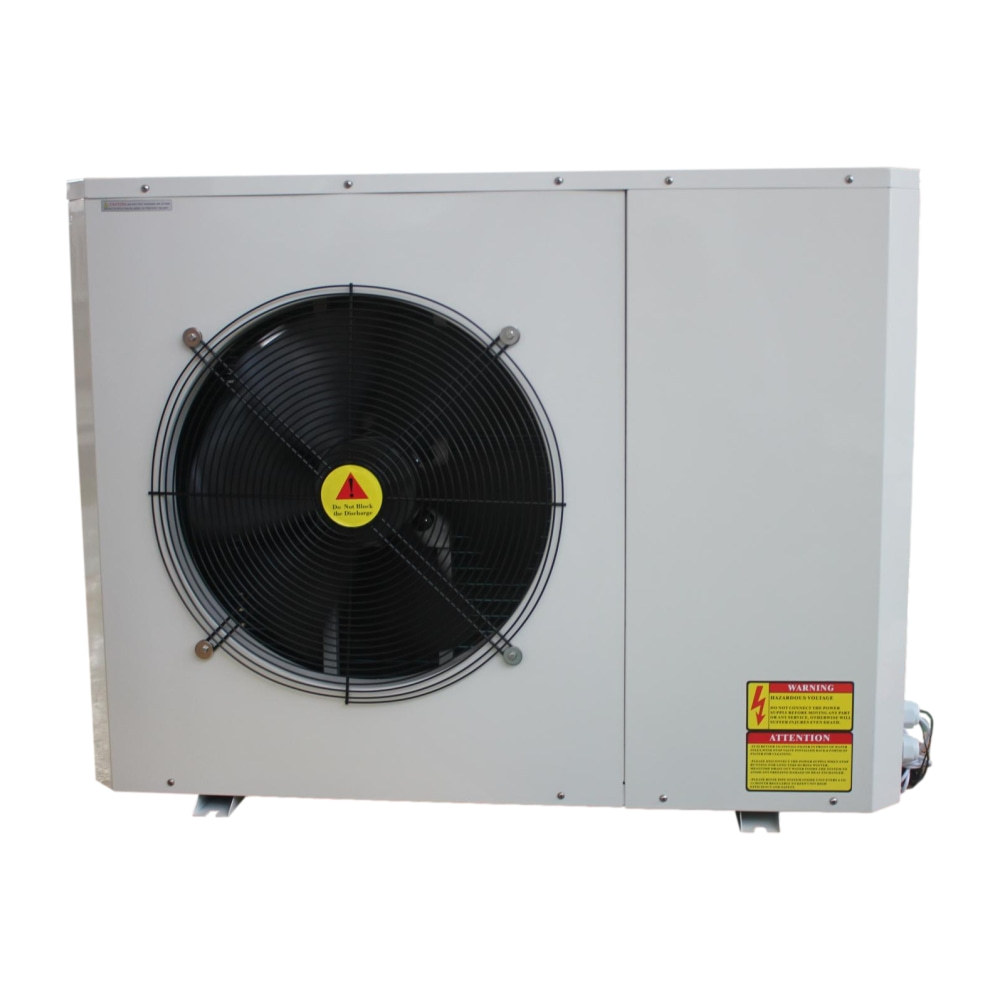
Service-friendly monobloc layout: the front panel removes for coil cleaning and pump access without disturbing any refrigerant joint.
Pros: flexibility and a smaller outdoor unit
Split is the natural choice where outdoor space is constrained or where the building already has a utility room sized for the hydrobox. Installers can place the outdoor unit up to 15-30 m away from the indoor module (line lengths depend on model), routing refrigerant through a small drill core rather than accommodating a hydraulic run.
Cons: on-site refrigerant work and F-Gas exposure
Split systems require a certified installer to flare, pressure-test, evacuate, and charge the refrigerant interconnect. In the EU and UK this means an F-Gas-certified technician. The refrigerant piping also lives in the building envelope, where any future leak is a leak that may need professional repair under warranty. Suoher's monobloc design specifically eliminates this category of on-site work - the refrigerant loop never leaves the cabinet.
4. Side-by-side comparison
The table below summarises the practical differences an installer or specifier hits on day one of a project. Numbers are typical for a 12-16 kW class unit; always cross-check with the specific model's technical data.
| Dimension | Monobloc | Split (outdoor unit + hydrobox) |
|---|---|---|
| On-site refrigerant work | None - factory-sealed loop | Required - flaring, charging, leak test |
| Installer qualification | Standard plumbing/HVAC technician | F-Gas certified (EU/UK) |
| Outdoor footprint | Larger (1.5-2x equivalent split) | Smaller (compressor + coil only) |
| Hydraulic routing | Flow + return + power line | Refrigerant line set (gas + liquid) |
| Noise at neighbour | Single source, often placed on service wall | Easier to position for low-noise sites |
| First-time install hours | ~3-5 hours | ~6-10 hours (with refrigerant work) |
| EU 2024/573 status | Subject to 2027 limit (≤12 kW, GWP < 150) | Subject to staged ban through 2035 |
| Indoor refrigerant pipe | None | Yes, concealed in building |
| Typical unit cost (12 kW, R290) | Moderate - one cabinet, one logistics line | Lower outdoor unit, plus hydrobox + line set |
| Service access | Outdoor service, away from living space | Hydrobox sits inside plant room |
5. How the F-Gas regulation changes the maths
The single biggest reason configuration choice now matters is the EU F-Gas Regulation (EU) 2024/573 and its delegated acts. Two clauses drive the decision for air-to-water heat pumps:
2027: monobloc ≤ 12 kW must use refrigerants with GWP < 150
From 1 January 2027, single-split and monobloc air-conditioning and heat-pump units with a rated capacity of ≤ 12 kW may only be placed on the EU market if they use refrigerants with a global-warming potential below 150. R32 (GWP 675) and R410A (GWP 2088) are out for new units in this category. R290 (propane, GWP 3) and R1270 (propene, GWP < 2) are the practical options, both with very low GWP and well-tested performance in monobloc EVI designs.
2035: full phase-out of split heat pumps using high-GWP refrigerants
From 1 January 2035, all split air-to-water heat pumps with rated capacity above 12 kW using high-GWP refrigerants (≥ 150) may no longer be placed on the EU market. The phase-out is staged by capacity: > 50 kW by 2027, between 12 and 50 kW by 2029, ≤ 12 kW by 2032. Monobloc units face a parallel 2027 limit because the regulation treats them on the same footing. The practical consequence: any split project planning 2027 commissioning should already be specifying a low-GWP refrigerant.
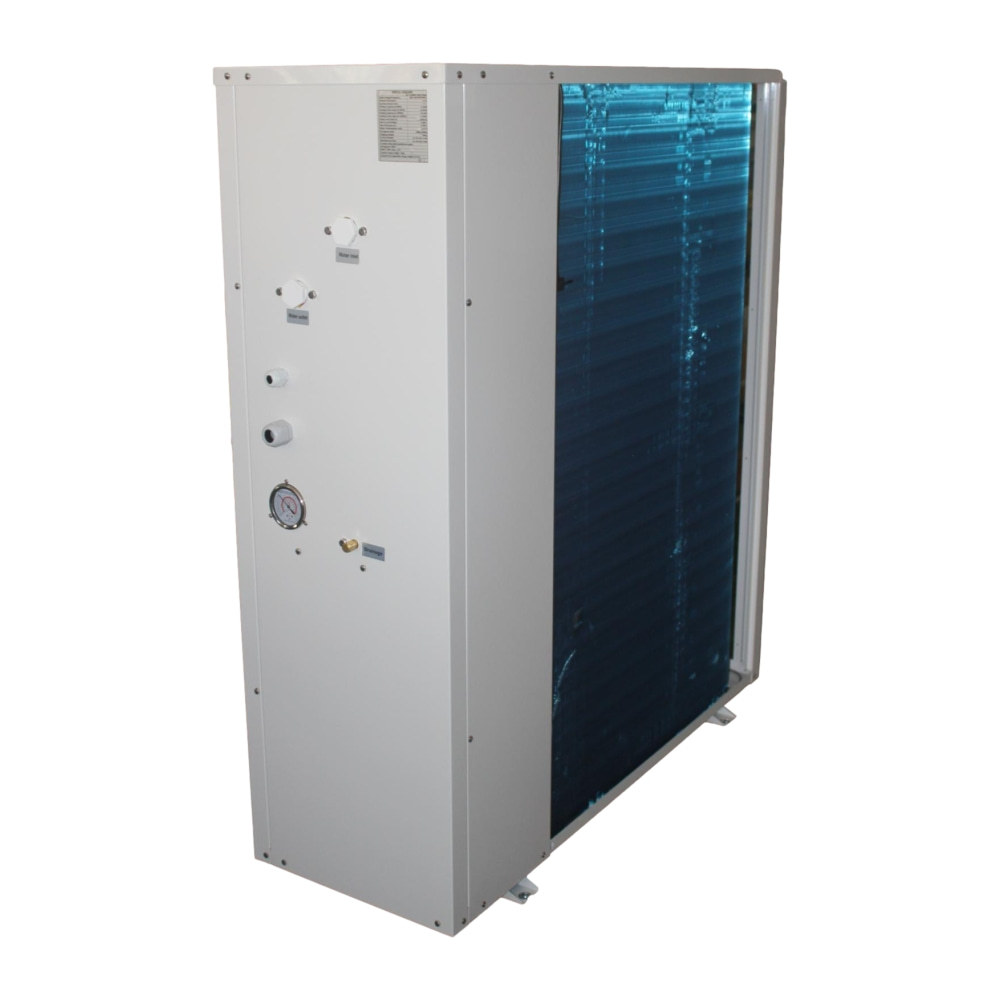
EVI monoblocs are designed around low-GWP refrigerants from the start, which keeps them compliant through each step of the F-Gas phase-down without a refrigerant retrofit.
6. How to choose for your market
Use the matrix below to anchor the configuration choice in your specific project context.
For new-build single-family homes (EU/UK)
Most new-build detached and semi-detached projects in 2026-2027 lean monobloc, primarily because of the F-Gas exemption on refrigerant work and the predictable hydraulic routing for underfloor heating. A 12 kW monobloc covers a 120-180 m² well-insulated envelope; a 16 kW unit extends coverage to 200-260 m² with simultaneous DHW.
For dense urban retrofits with balcony or courtyard constraints
If the outdoor space is narrow or noise-restricted, a split configuration with a compact outdoor unit plus a small indoor hydrobox often wins, even with the F-Gas overhead. Position the outdoor unit on a vibration-isolating wall bracket and use a quiet-blade fan model to keep below 35 dB(A) at 3 m.
For small commercial and light industrial projects
Commercial sites (workshops, light retail, small offices) typically use larger split systems or a cascade of monoblocs. Choose monobloc when project footprint is generous and the install team is plumbing-led; choose split when there is a plant room and the team is refrigerant-certified.
For OEM and white-label distributors
Distributors serving multiple EU member states should standardise on the configuration with the longest compliance runway. With the 2027 and 2035 milestones already locked in, that means a low-GWP R290 monobloc platform with EVI capability for cold-climate projects. Suoher's export engineering team works with OEM partners on label design, manual localisation, and access to EN 14511 / EN 14825 test data for each market.
Single-phase 220 V supply suits European residential retrofit projects. EVI vapour injection extends heating output below -15 °C, while the factory-sealed monobloc loop keeps the install F-Gas-light.
Send Us Your Project Layout - Get a Configuration Brief in 48 Hours
Choosing between monobloc and split is rarely a one-size-fits-all decision - it depends on the building envelope, the local installer pool, the planned commissioning year, and the F-Gas milestones you want to clear. Suoher's export engineering team reviews project layouts (new build or retrofit) and returns a written configuration brief within 48 hours: recommended capacity, monobloc or split rationale, refrigerant choice against the EU timeline, accessory list, and indicative project budget. Send the envelope size, the planned install year, and the target EU member state - we do the rest.
For distributors and OEM partners: Suoher can ship pre-charged EVI monoblocs in OEM packaging from the factory in Foshan, with full EN 14511 / EN 14825 test data, manual localisation in 8+ languages, and a private-label accessory pack if required. Open the SHAW-12EVIM spec sheet or contact Suoher to start a project brief.